
Products and SKUs
Maintain product codes, barcodes, names, categories, and related business attributes in one place.
RFID Software Platform
Connects products, tags, business documents, inventory changes, and physical goods through a unique RFID identity, with traceability across label generation, inbound and outbound verification, stocktaking, and item-level EPC history.
RFID traceability is not about writing every detail onto the tag. It is about linking backend business data through a unique identity.
The RFID tag provides a unique identity that devices can read, while the business system records what actually happens to each item during label generation, inbound, outbound, stocktaking, and verification.
Using the EPC as the main thread, the system links the product, warehouse, business documents, inventory status, operation time, and device read records into a per-item history that can be queried, verified, and traced.
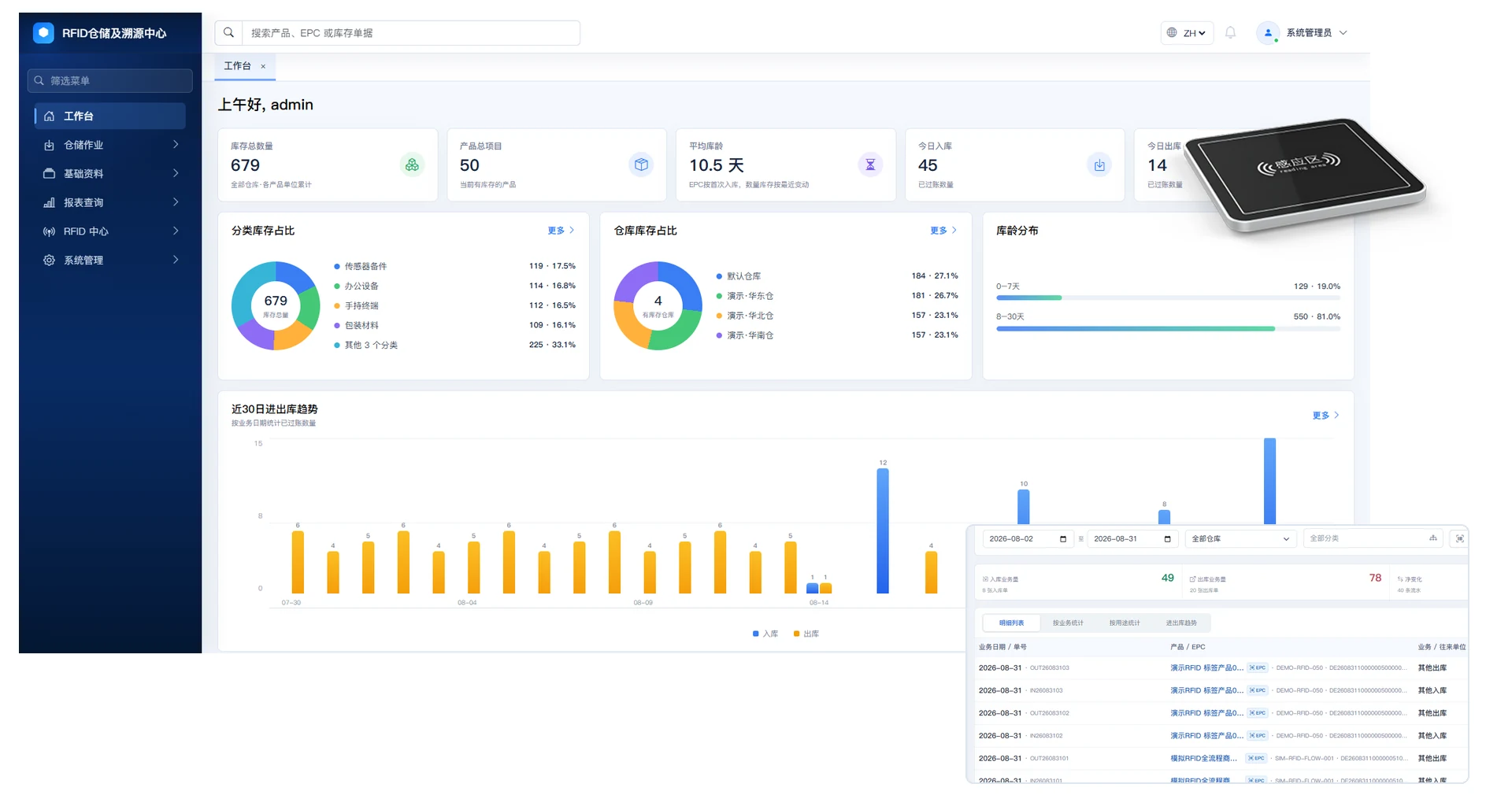
Maintain product codes, barcodes, names, categories, and related business attributes in one place.
Manage EPCs, label printing, encoding, read-back, and the binding between products and tags.
Record the current warehouse, quantity on hand, inventory status, and inventory movements of each product.
Manage inbound, outbound, and stocktaking documents, and link them to actual RFID read results.
Connect on-site capture devices such as label printers, desktop readers, and handheld terminals.
Use a single EPC as the index to review label, inbound, outbound, stocktaking, and verification events.
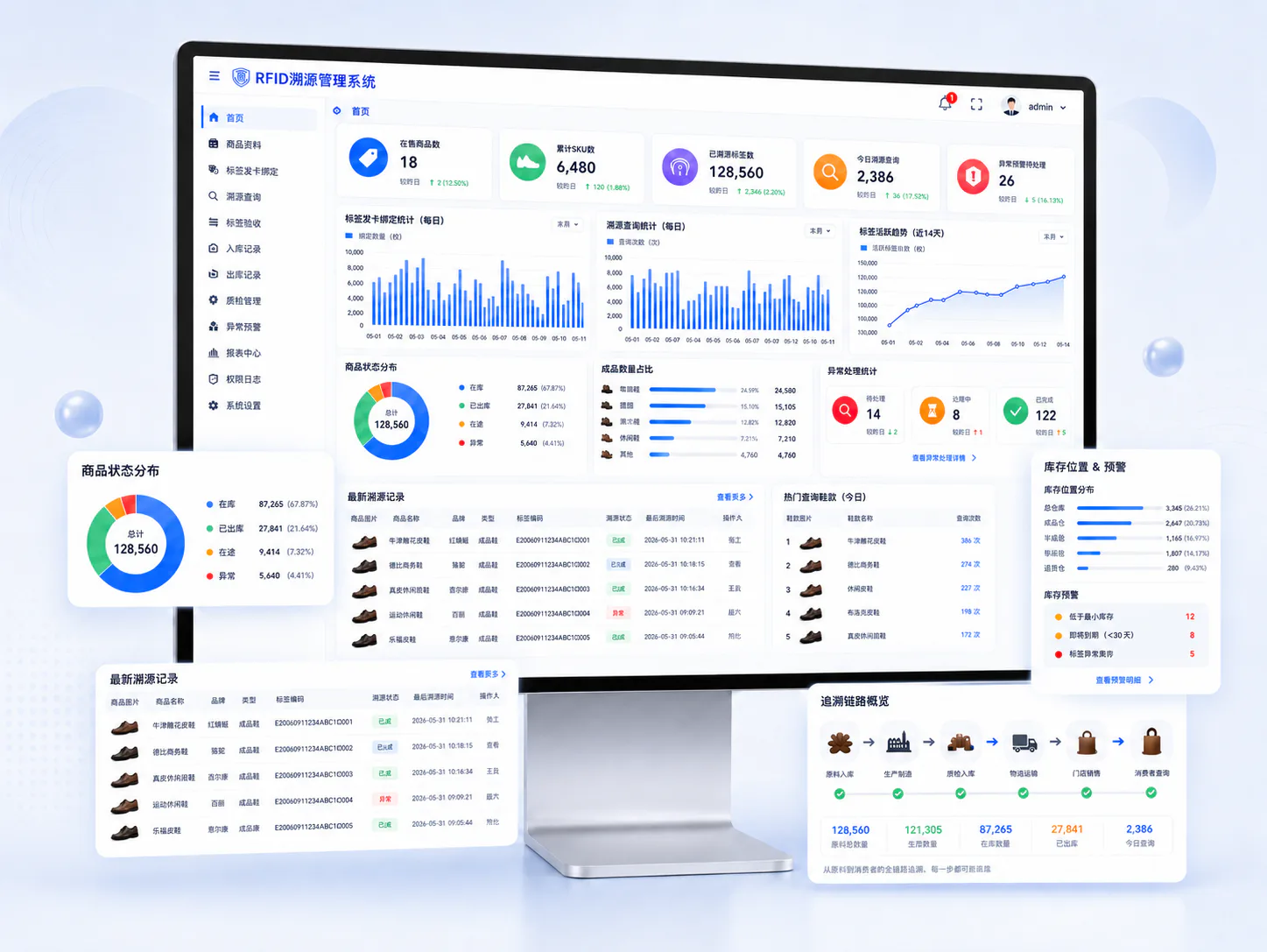
Conventional inventory shows only totals, making it hard to trace what a specific item has been through.
For RFID items, verifying the quantity is not enough. You also need to confirm that the EPC is registered, the tag relationship is valid, and the current status allows receiving.
Without automatic verification between the document and the items actually taken, wrong and missed shipments become likely.
After repeated inbound, outbound, and on-site movement, system inventory and physical stock may no longer match.
Surplus and shortage are only outcomes; review, cause confirmation, and adjustment records matter just as much.
There is no fast way to find when a label was created, when the item was received or shipped, and which documents were involved.
Product Setup
EPC Generation and Label Printing
RFID Inbound Verification
RFID Outbound Verification
Inventory count
Stocktake Variance Review
Item-level EPC Traceability
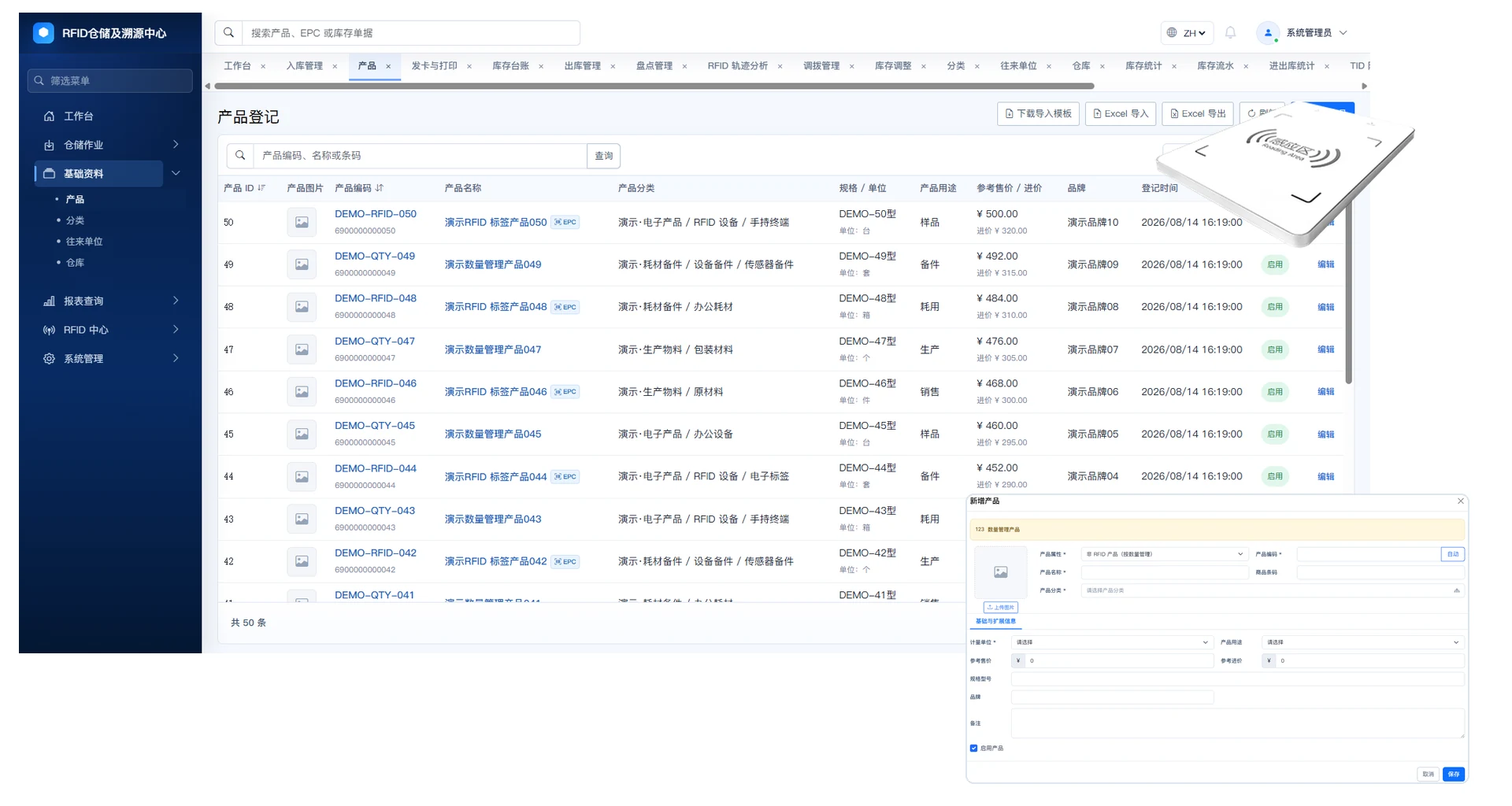
Maintain product master data and establish a per-item RFID identity through the EPC.
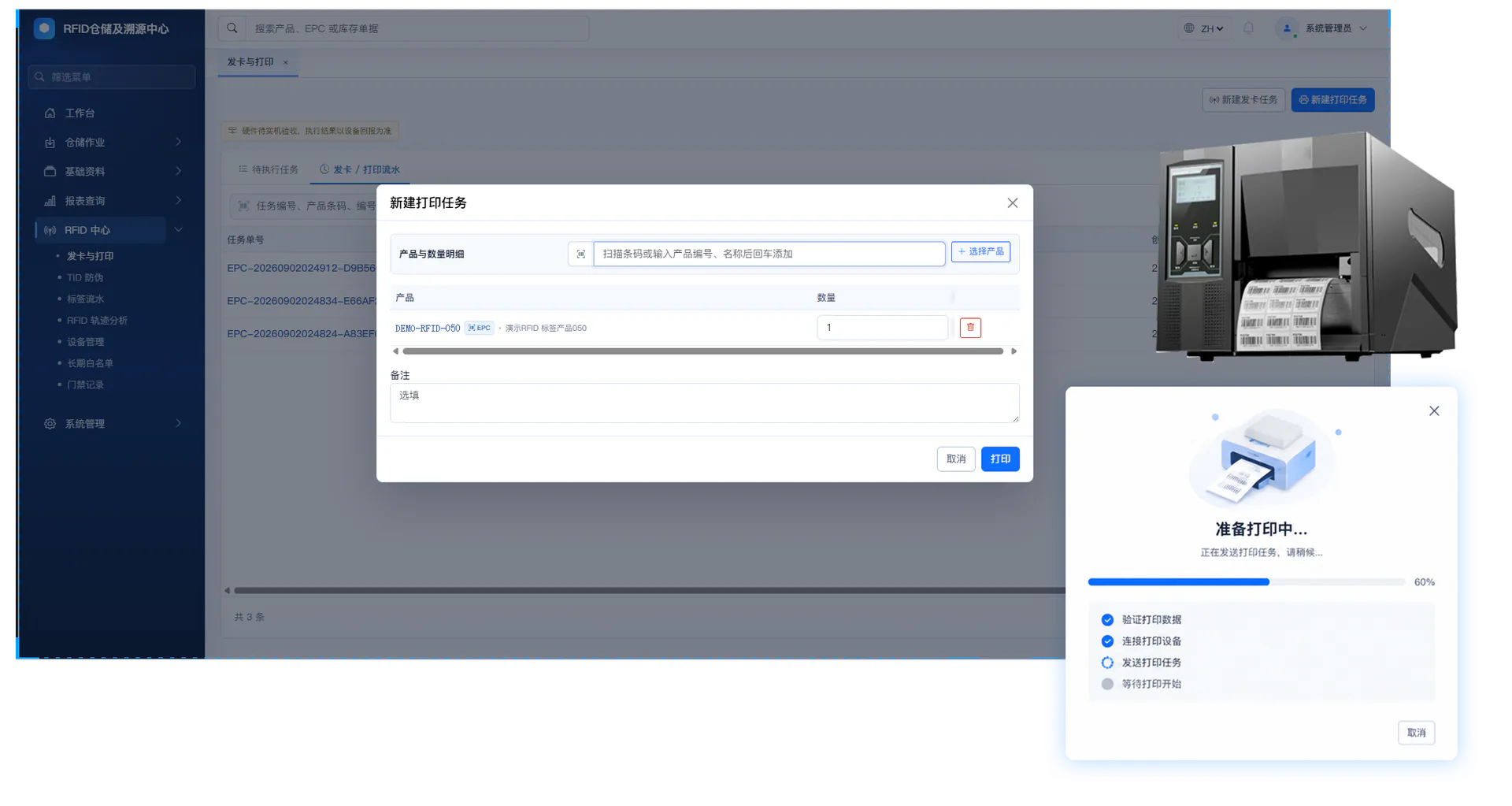
Create print tasks, let the backend generate EPCs, send tasks to the local print and encoding service, and confirm results against device feedback.
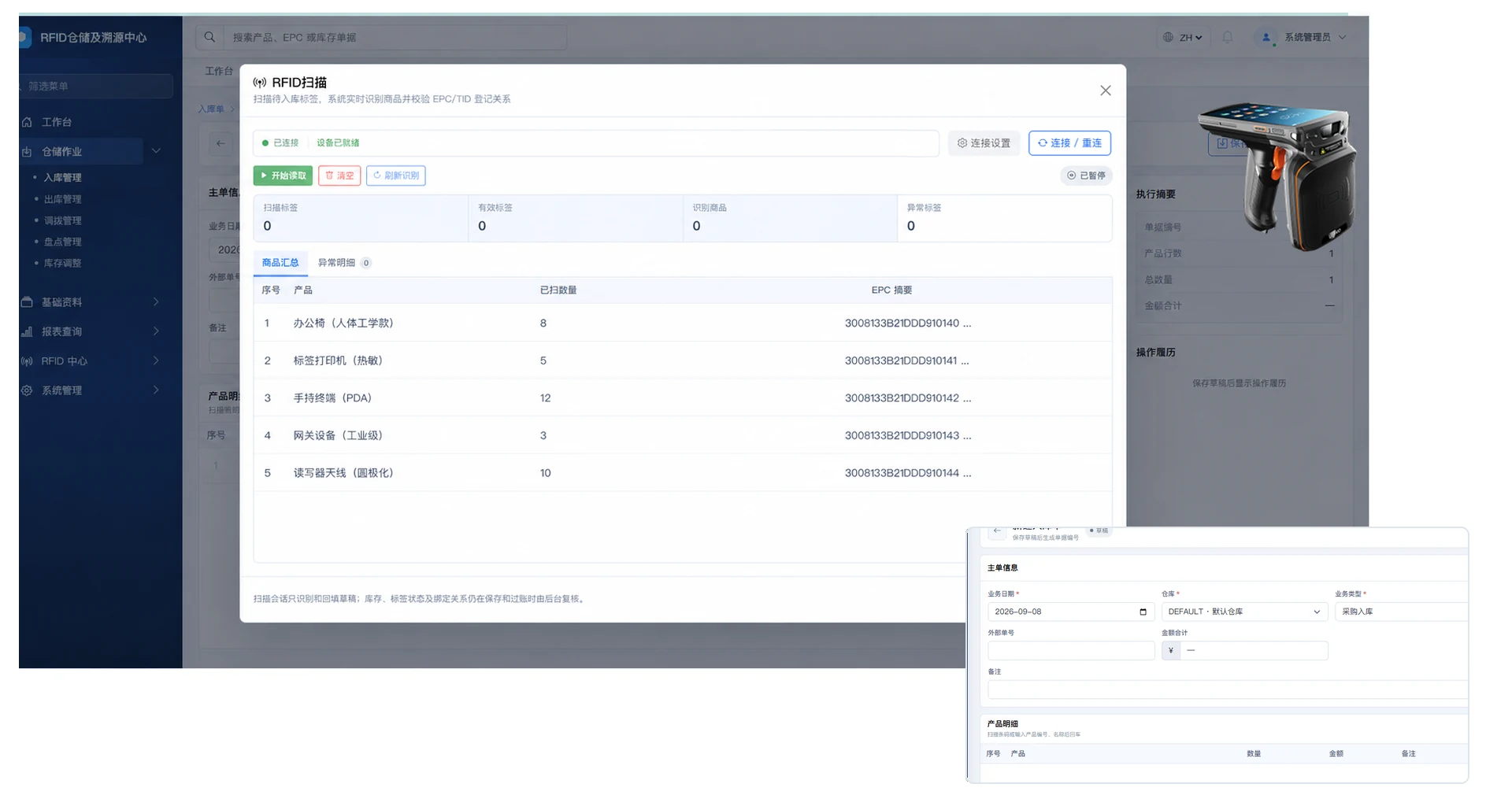
Continuously read incoming tags and verify the product behind each EPC, the tag registration relationship, quantities, and current inventory status.
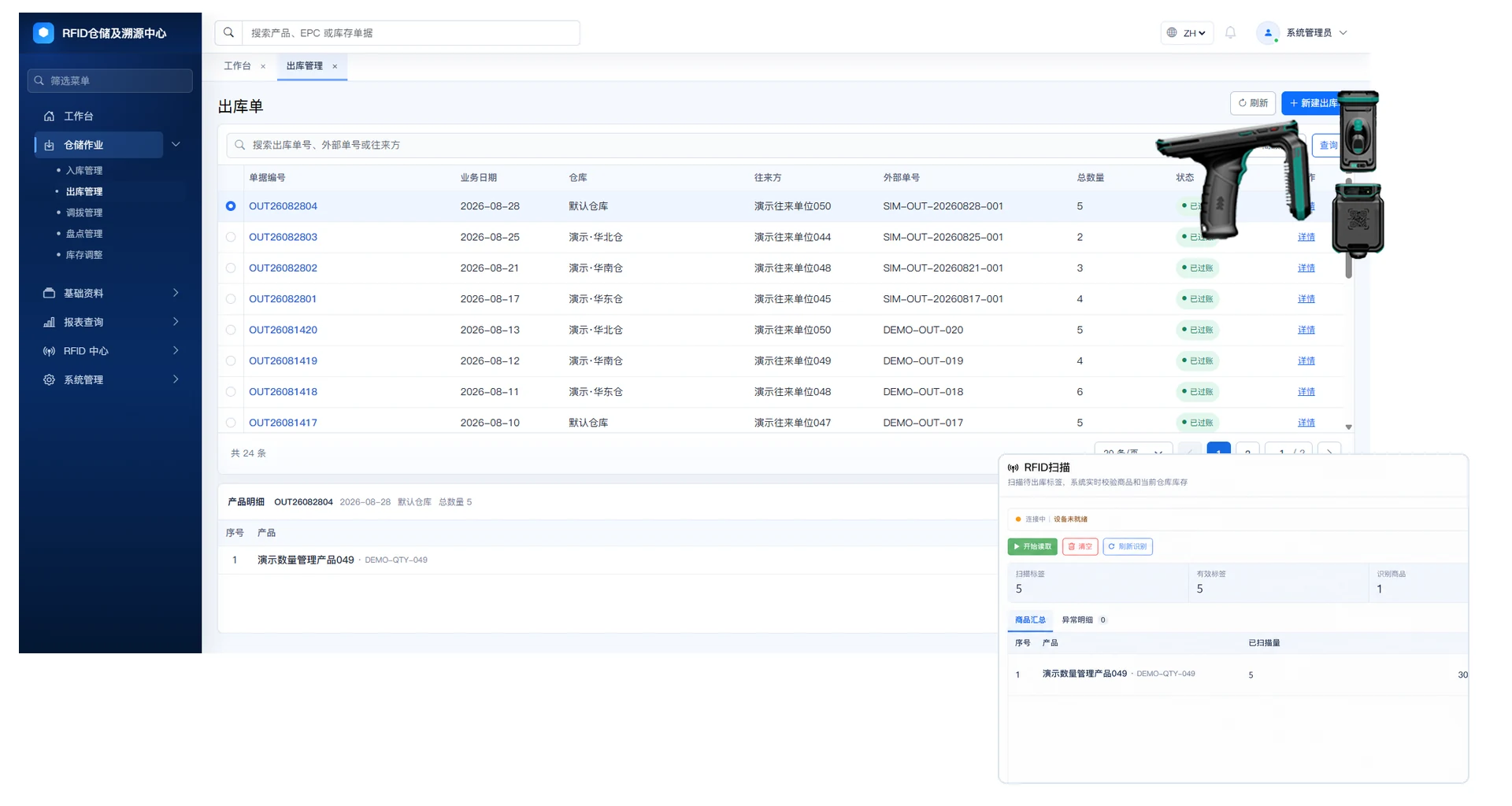
Read items against the outbound document and verify products, quantities, warehouse ownership, and tag status.
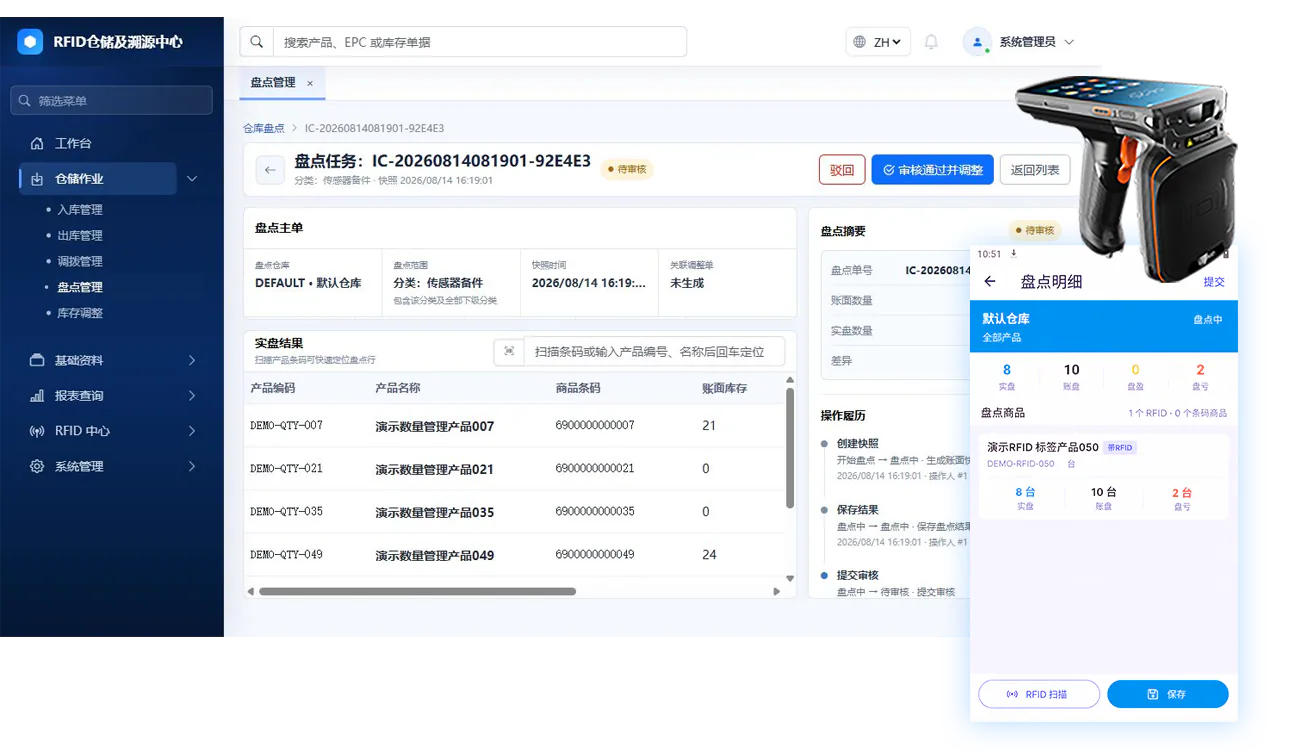
Create stocktake tasks on the desktop, capture items on site with RFID devices, and produce book, physical, and variance results.
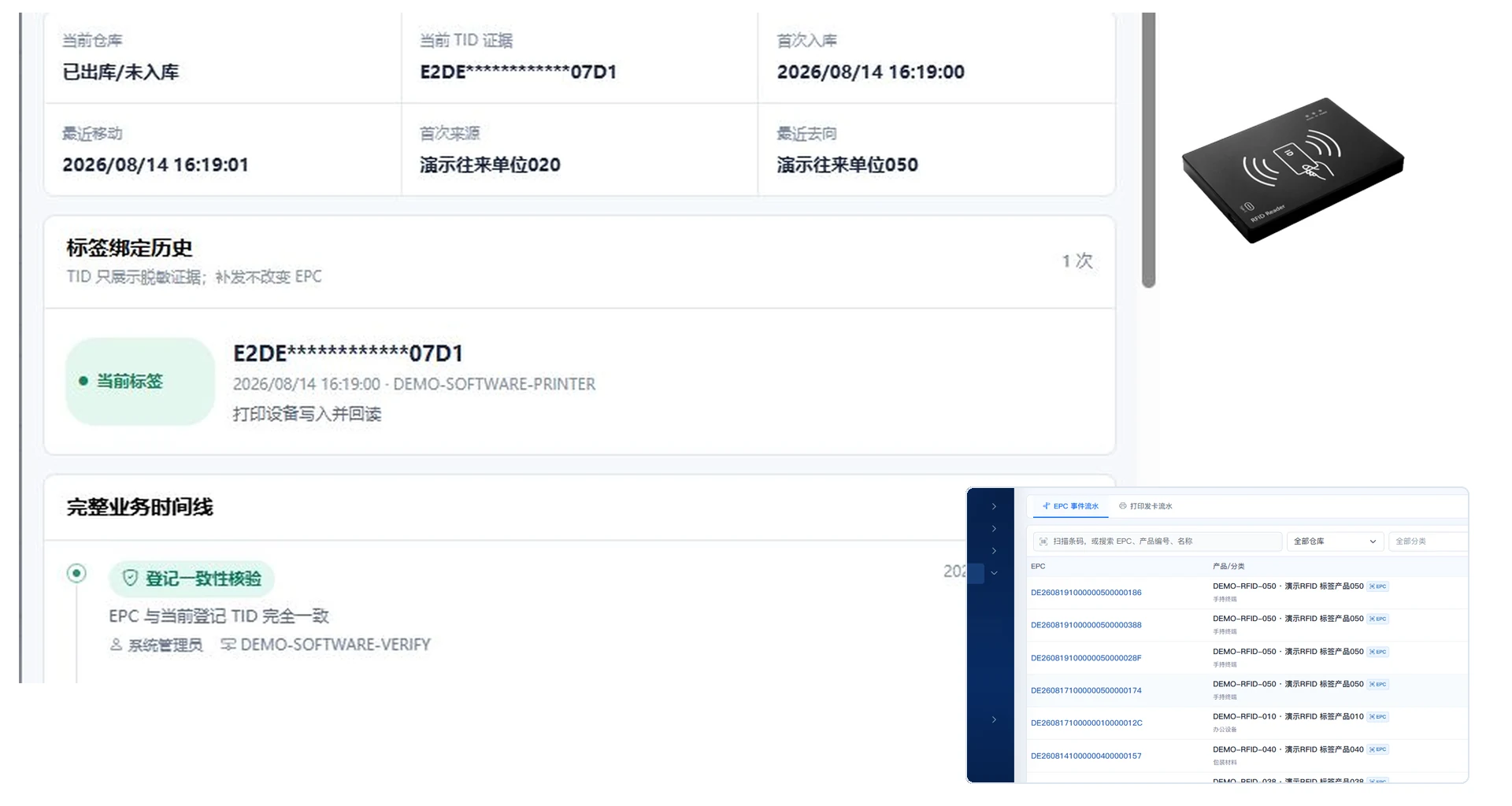
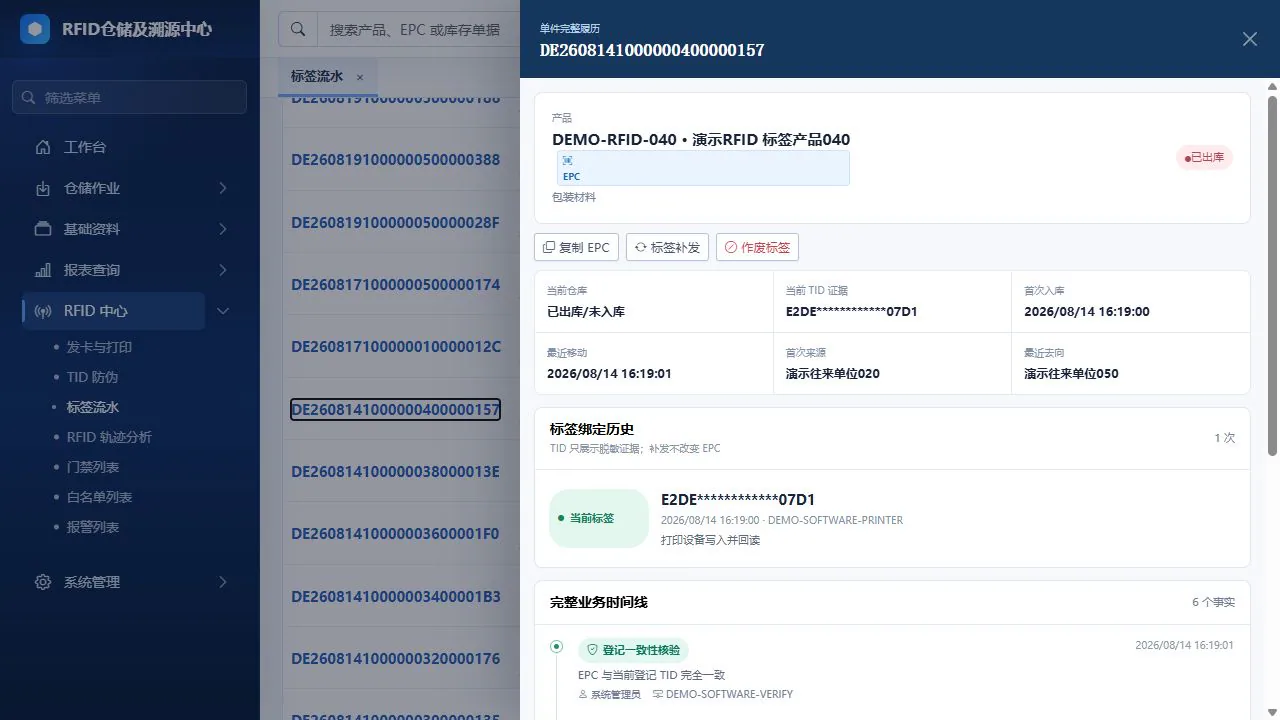
Query by EPC for the product, warehouse, related documents, operation time, tag evidence, and the complete business timeline.
After arrival, tags are read continuously to determine whether the goods can be registered as valid inventory.
Items are read against the outbound document to determine whether what is taken matches the order.
Matching quantities is only the first step. Product identity, tag relationships, and inventory status must also be consistent.
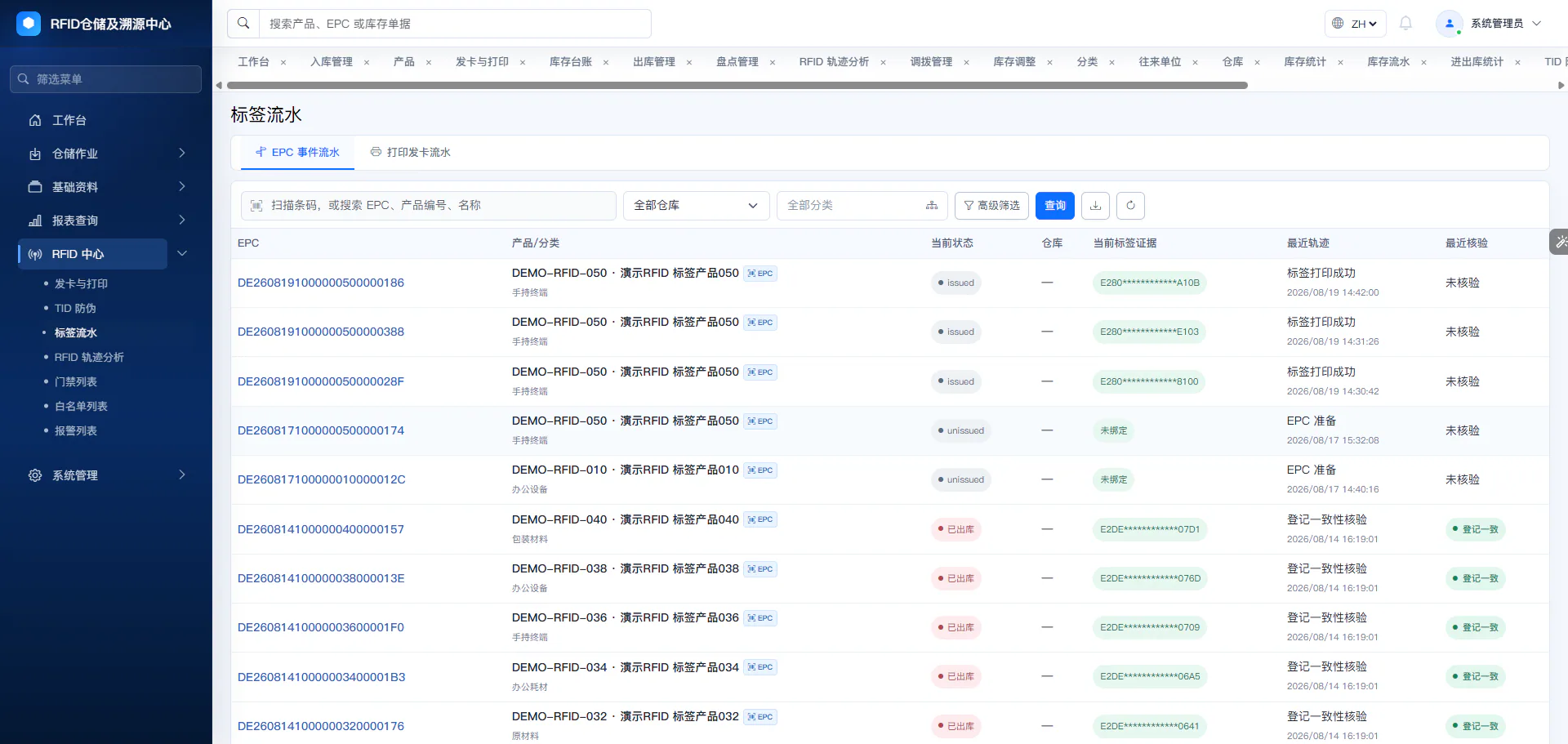
Compares on-site read values with registered relationships to help surface abnormal tag relationships.
Verification results depend on the tag, device, and project conditions. They are used to compare registration relationships, and are not an anti-counterfeit conclusion independent of device conditions.
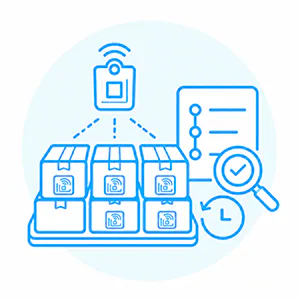
Beyond total quantities, business history can be queried along a single EPC.
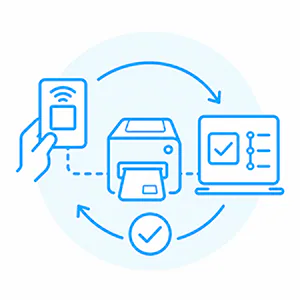
Label printing, encoding, and read results are based on what the device actually returns.
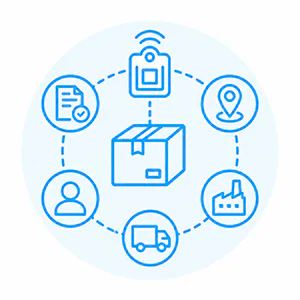
Business documents record the plan, while RFID reads confirm the actual items.
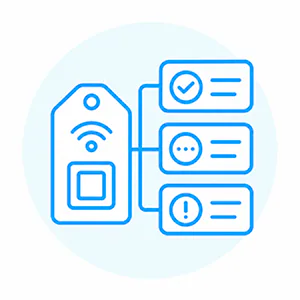
A book baseline is saved when a stocktake task is created, so later book changes do not affect the result.
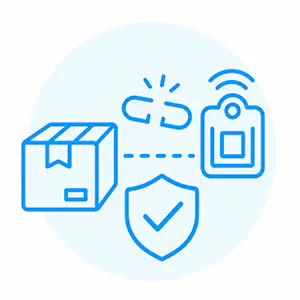
Stocktake results first form variances, and inventory is adjusted only after review and approval.
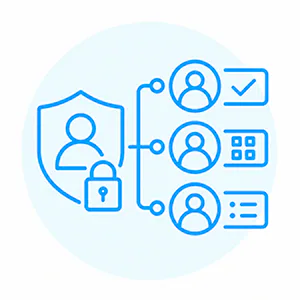
Products, tags, documents, warehouses, device reads, and verification results form a continuous record.
Every RFID item has its own EPC, so per-item stock and business history can be queried.
Quantity, EPC, tag relationship, and inventory status are verified together.
Outbound documents are compared with physical items to reduce shortages, excess, and wrong picks.
Book snapshots, physical results, surplus and shortage, and handling history are managed together.
Review label, inbound, outbound, stocktaking, and verification events through the EPC.
RFID gives every pair of shoes a unique digital identity that links quality inspection, inventory, orders, logistics, and returns end to end.

Related Solution
Connect traceability data across production, distribution, sales, and after-sales service.
The same product can have many units in stock. The EPC distinguishes each individual item and indexes its tags, documents, inventory movements, and business history.
A matching quantity does not mean the product, tag, and status are all correct. RFID receiving also verifies EPC ownership, the tag relationship, and the current status of the item.
No. A stocktake first produces physical and variance results. Inventory is adjusted only after review and approval, and the handling record is retained.
No. This function checks whether on-site read values match the registered relationship. Actual effectiveness depends on the tag, device, and project conditions.
Anomalous data flows to and from the region can be identified through channels.
The project may be opened for proofing or searching for access points, as required by the project.
Contact Us
Tell us about your business scenario. We can help define the right tags, hardware, platform, and deployment approach.