Commodities and SKU
:: Harmonized maintenance of basic information, such as commodity codes, SKU, specifications, colours, sizes, prices, classifications and suppliers, and support of integrated management of doors, warehouses and headquarters.
RFID Software Platform
The RFID smart retail platform serves chain retailers, brand stores, direct-operated outlets, franchisees, and multi-warehouse operations. It manages items, RFID tags, purchasing, sales, inventory, members, suppliers, security gate devices, and operating data in one place, so store front ends and headquarters back office work together. Stores can handle checkout, returns, and member services by barcode or RFID; warehouses can process receiving, outbound, transfers, and stocktaking; and headquarters can maintain master data and query operating data by store, warehouse, item, and time.
The RFID smart retail platform serves chain retailers, brand stores, direct-operated outlets, franchisees, and multi-warehouse operations. It manages items, RFID tags, purchasing, sales, inventory, members, suppliers, security gate devices, and operating data in one place, so store front ends and headquarters back office work together.
The door store can perform cash collection, return and membership services through bar code or RFID; the warehouse can process the entry, exit, transfer and inventory; the headquarters can maintain the basic information in a uniform manner and search the business data by door, warehouse, commodity and time.
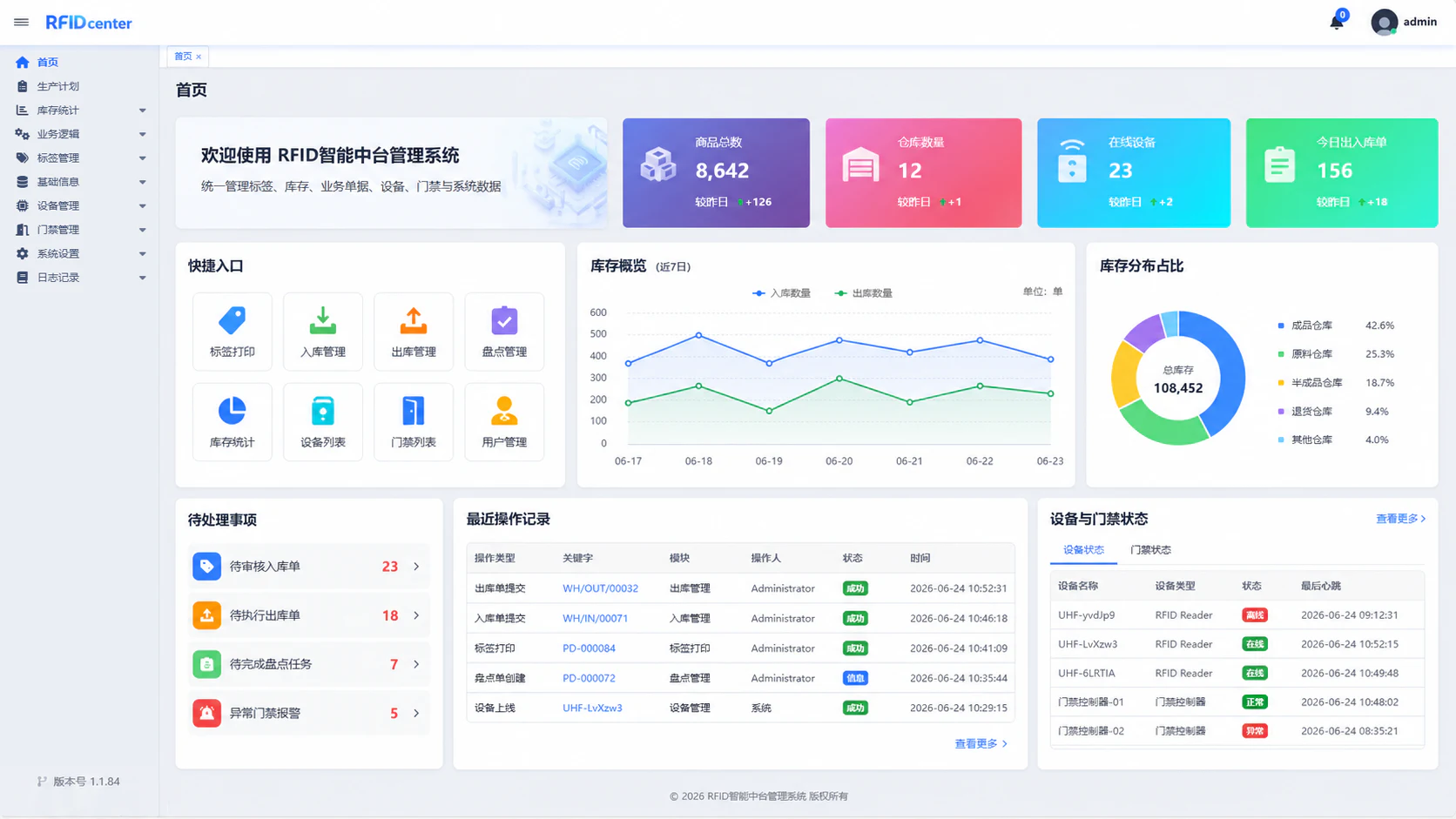
:: Harmonized maintenance of basic information, such as commodity codes, SKU, specifications, colours, sizes, prices, classifications and suppliers, and support of integrated management of doors, warehouses and headquarters.
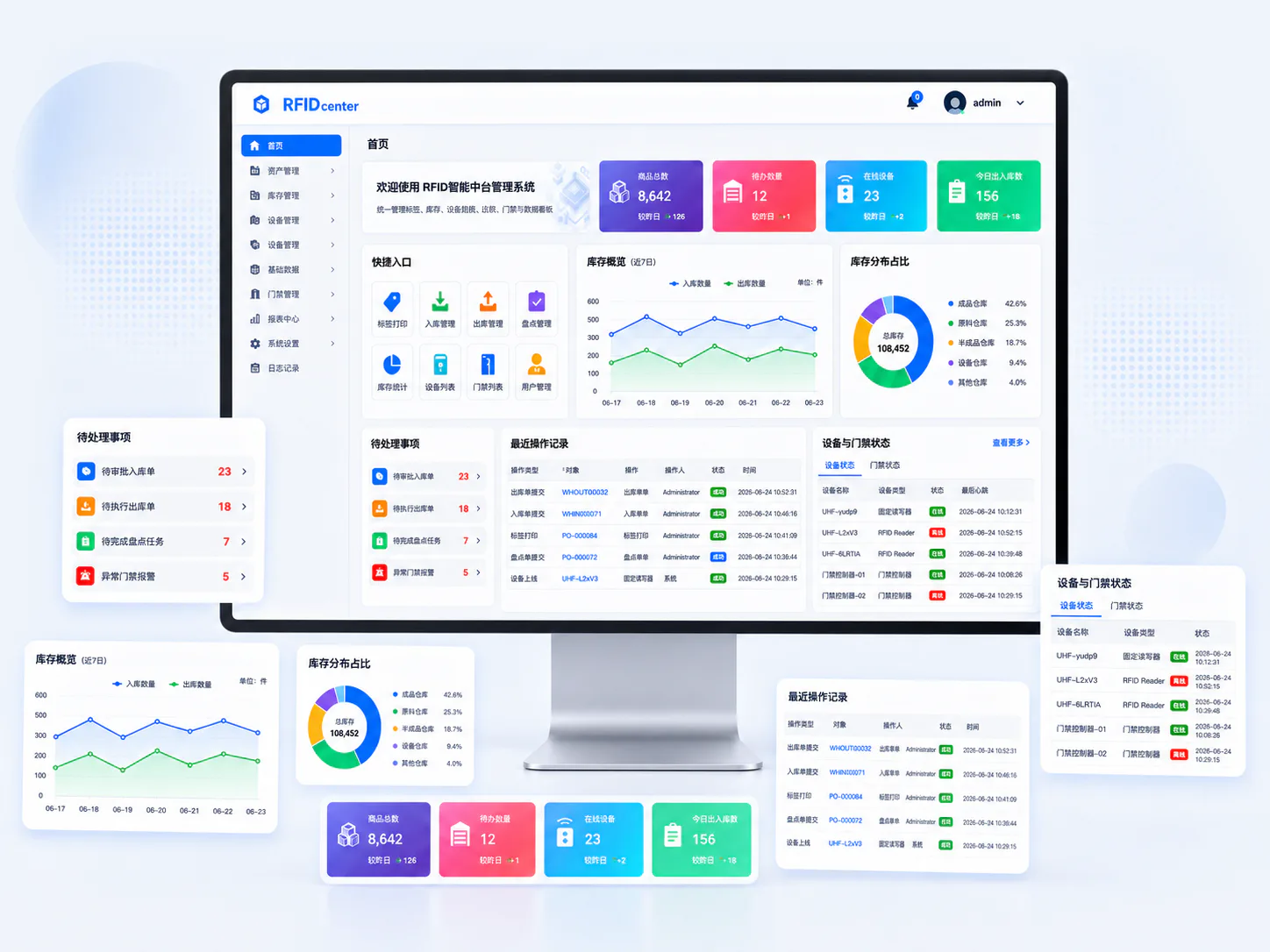
Manage RFID Tag coding, printing writing, card binding, changing of the label and status record, creating the only link between the commodity and the label.
Integrated management of direct camp sites, gate-storage, warehouses, storage areas and warehouse-place information to support multi-organizational, multi-location inventories and operational synergies.
Management of membership information, consumption records, marketing activities and preferential interests, and support for the fine-tuning of the operations of the shop in conjunction with sales data.
Centrally managed business documents such as procurement and sales, return, redeployment, inventory, related physical execution and inventory changes.
The scope of data access for goods, inventory, membership, statements, etc. is regulated by the functional rights of headquarters, door stores, warehouses, posts and role configurations.
Building basic information
Generate and bind labels
Create or receive business documents
Submitted and implemented operations
Verification or audit results
Complete records and queries
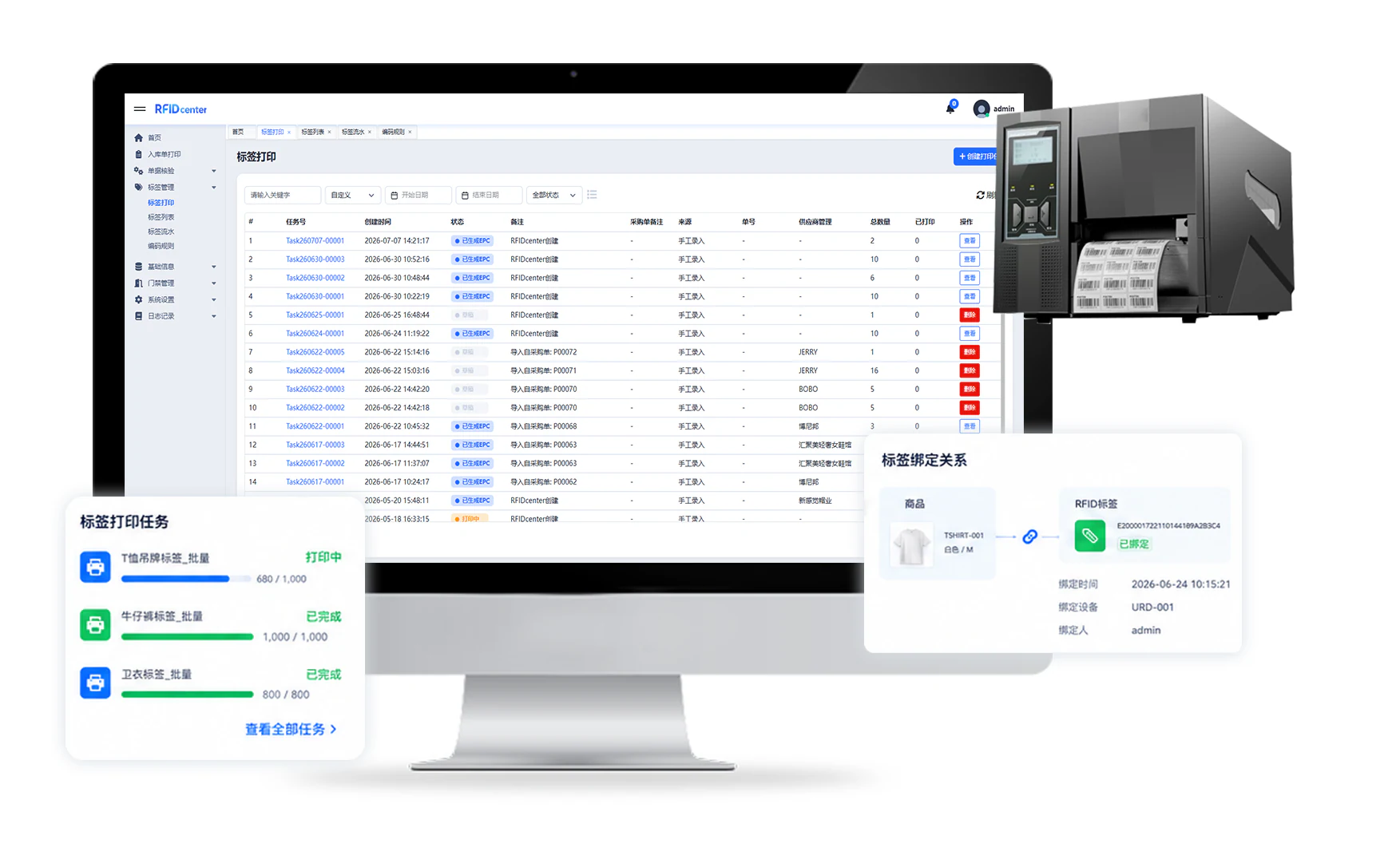
Harmonized maintenance of information on goods, SKU, bar codes, paragraph numbers, colours, sizes, prices, classifications, brand names and suppliers, and support for labelling, printing, issuance cards, binding, untiement and status queries, and the harmonization of commodity files with RFID Tag.
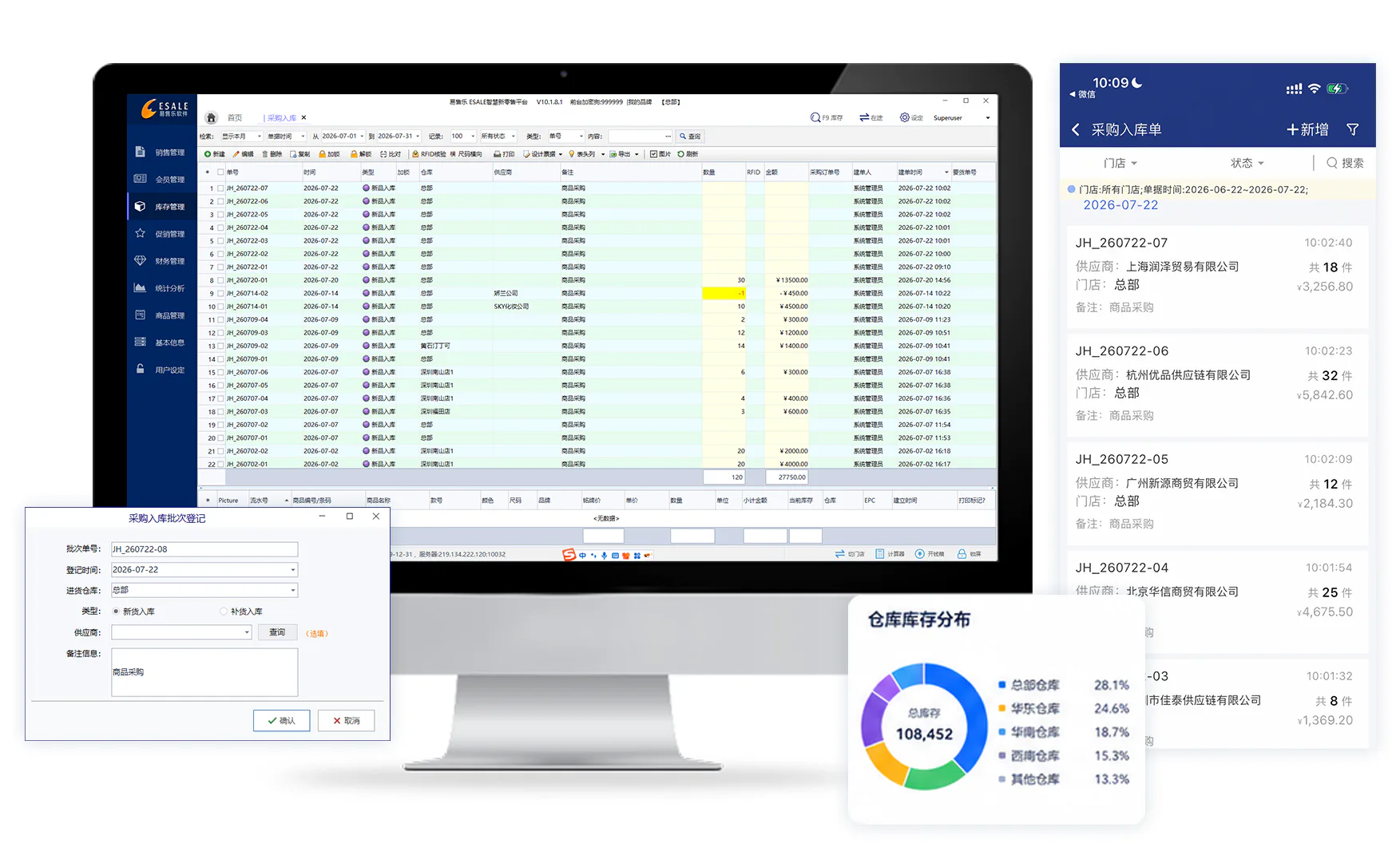
The manual entry, bar code scanning, form import and RFID batch count are supported, and the supplier and the receiving warehouse are associated.
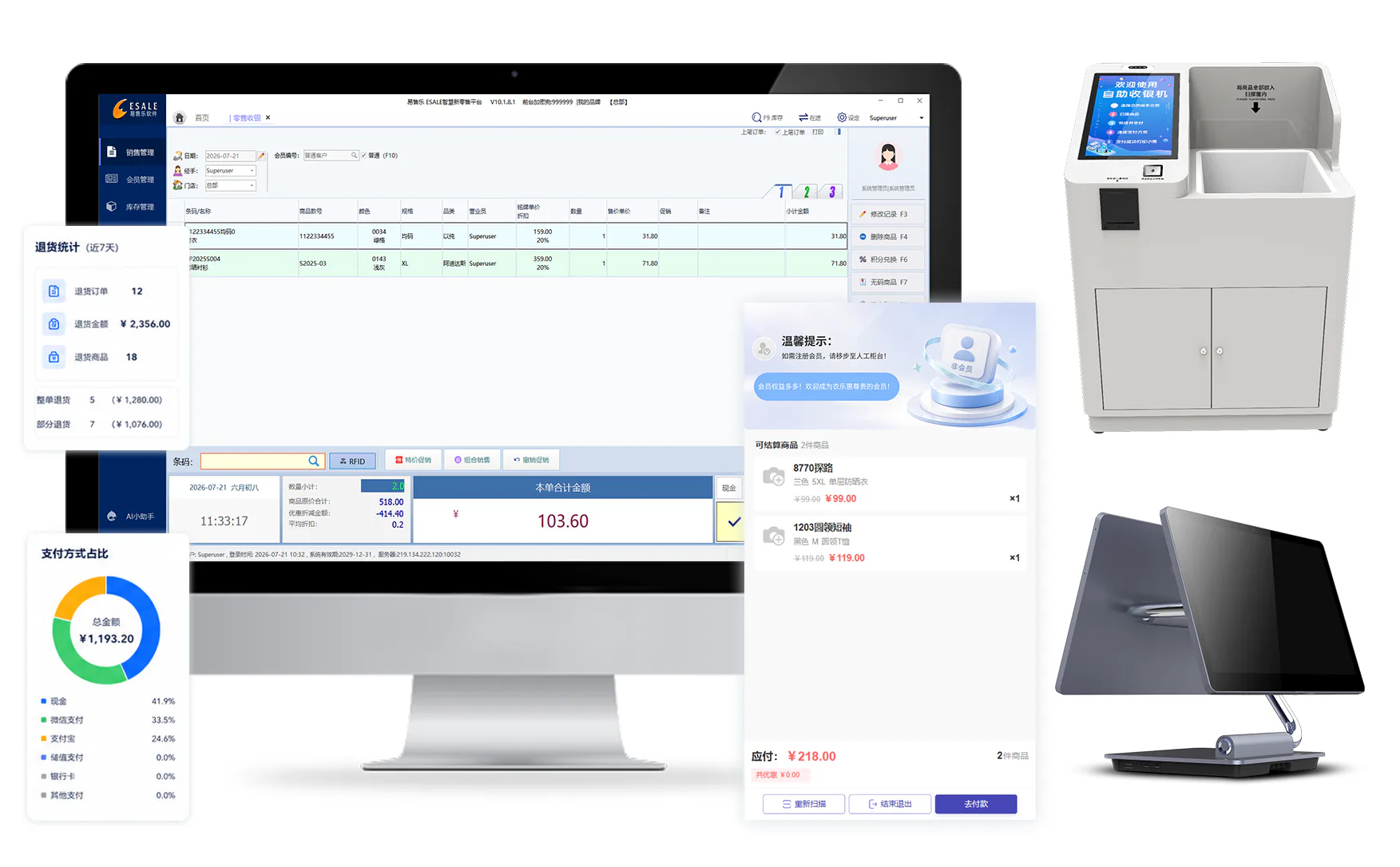
The bar code, commodity search and RFID bulk collections are supported, which handles members discounts, promotions, credits, reserve balances and multiple payment modes, and supports whole or partial return of goods, with simultaneous updates of sales, receipts and inventory records.
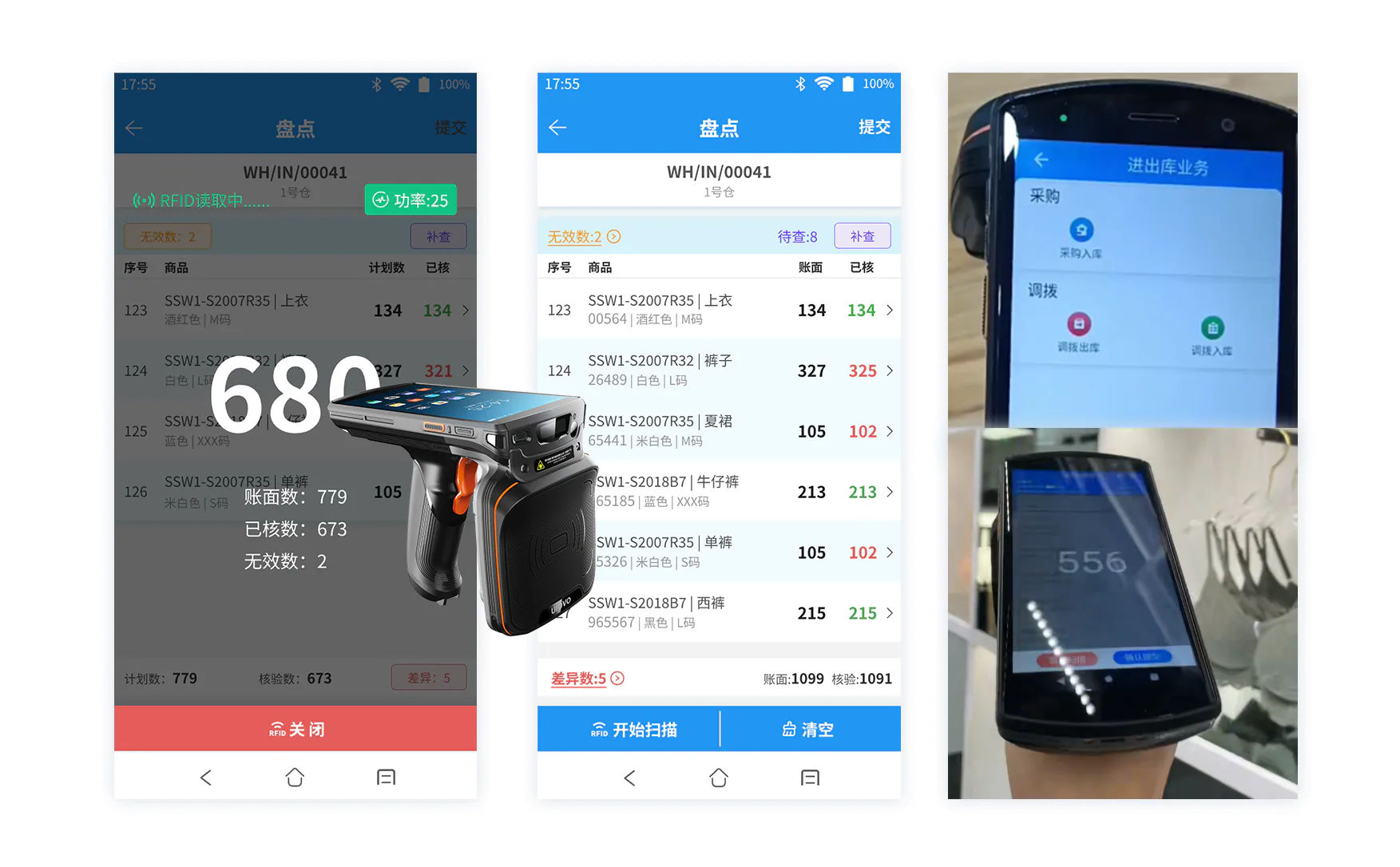
The inventory is adjusted to maintain consistency between the various stores and the warehouse.
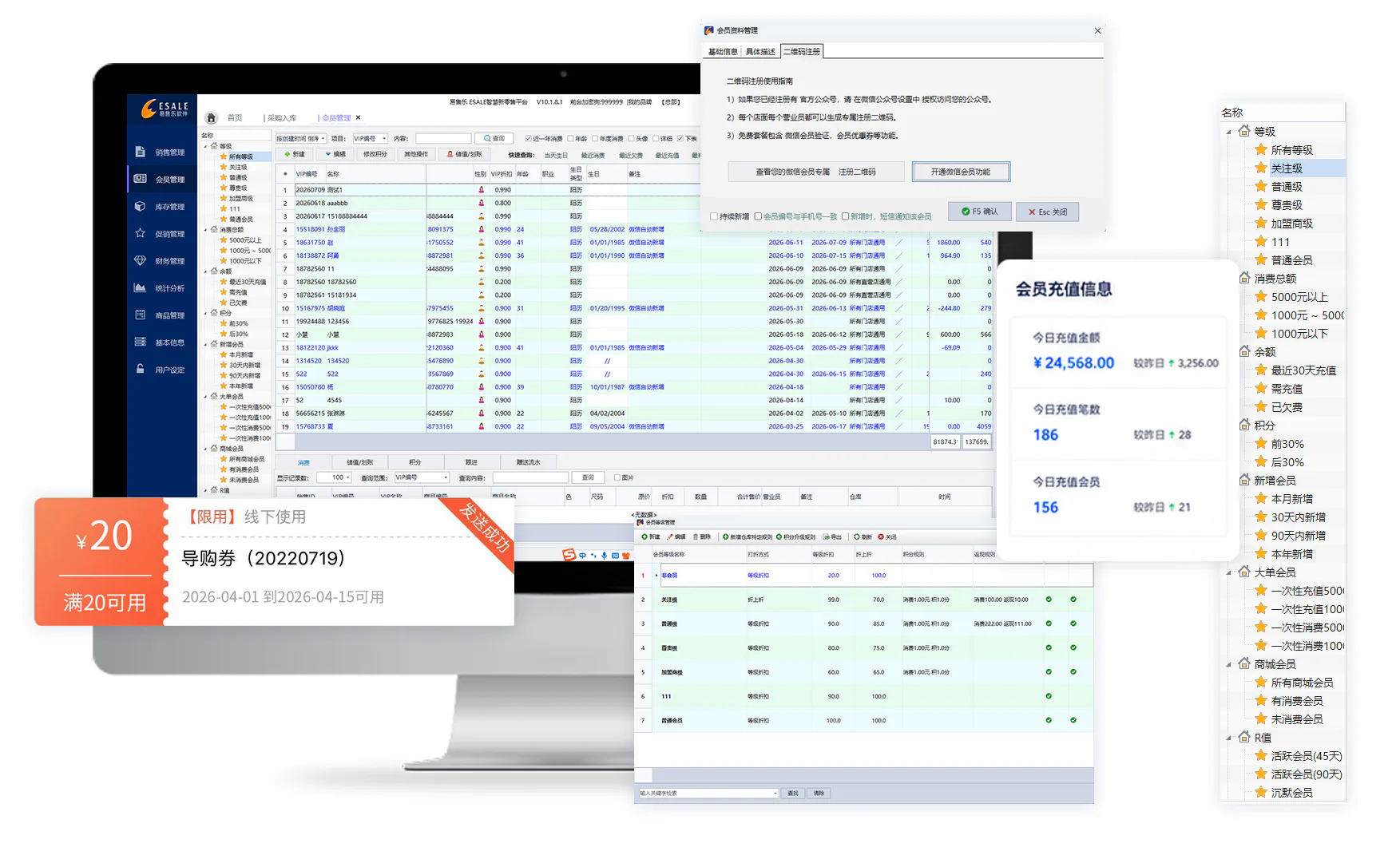
Member files, grade discounts, storage values, points, fill cards, shopping cards and promotional activities are managed centrally, the corresponding preferential rules are automatically matched when cash receipts are received and changes in consumption, filling and refund are recorded.
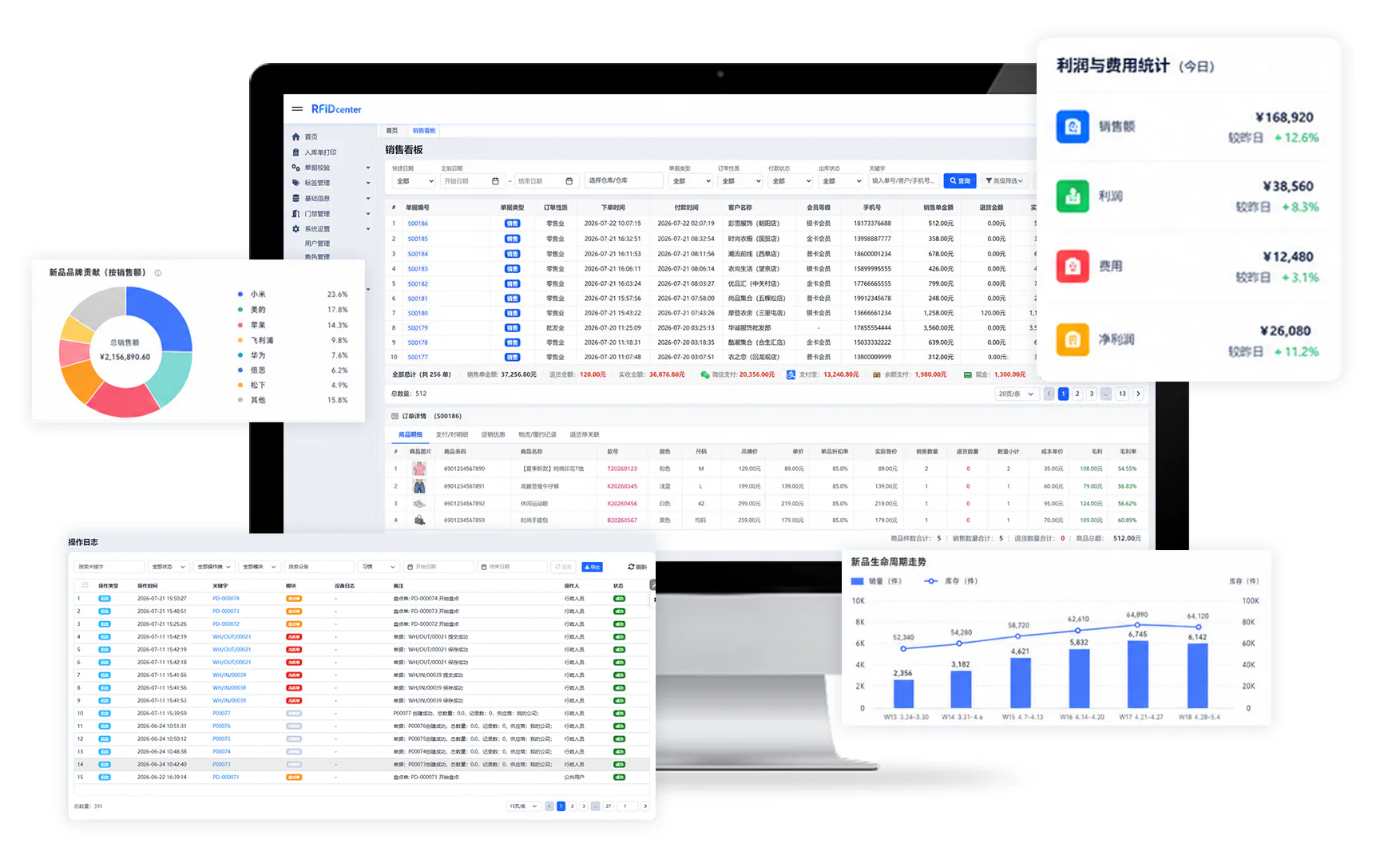
The system consolidates data on sales, inventory, profits, fees and the sale of goods, and provides a basis for querying doorshop operations and headquarters management.
Keep the goods in line from shop to sales to leaving.

Multiple items of commodities are identified and paid for in tandem with sales, stock and security.

Handheld equipment is scanning and automatically identifies the surplus, loss and misplaced goods.

The security gate verifies the sales status of the item: paid items pass normally, and abnormal items trigger an alarm.
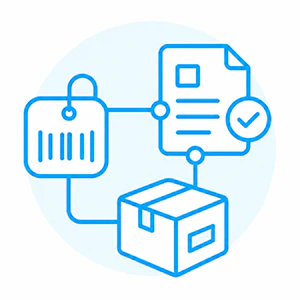
Harmonized maintenance of trade names, bar codes, paragraph numbers, SKU, colours, sizes, sales prices, costs, classifications, brand names, suppliers and warehouses, etc., to support bulk import and export.

Supports the EPC code configuration, label printing, taghead cards, commodity binding, untie, status queries and printing task management.
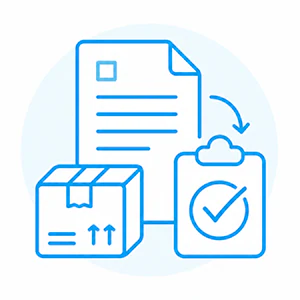
Support manual entry, bar-code continuous scanning, form import and RFID batch count, linking suppliers and receiving warehouses.
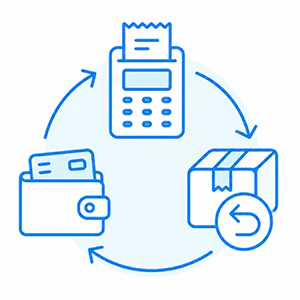
The self-checkout supports bar codes, commodity searches and bulk-readable RFID, which handles discounts, promotions, points deductions, membership balances and multiple payment modalities, and supports whole or partial return of goods.
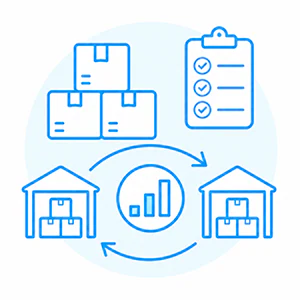
Supports bulk transfers, outwards, inward confirmations and audits between warehouses; inventory can create tasks, read labels through handheld batches and compare the number of books.
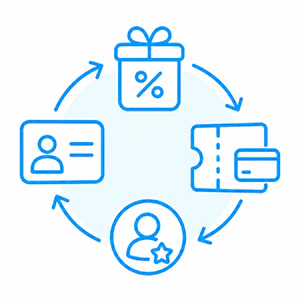
Management of member files, grade discounts, value balances, points, birthday alerts, fill cards and shopping cards, and setting up promotional activities by time, commodity or category.
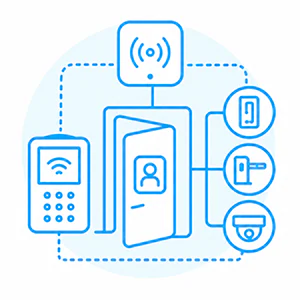
Manage RFID readers, handheld terminals, printers, and security gates; maintain the whitelist of tags allowed to pass; and record and handle unauthorized tag alarms.

Supporting user, role, warehouse belonging and menu access management, recording system operations and labelling; providing inventory, sales, profits, fees, vendor transactions, best-sale de-sale and business trends statements.
Harmonized information on commodities, labelling, membership, suppliers and warehouses, and a consistent business management profile.
Link procurement, sales, inventory and RFID identification to reduce the discrepancy between document recording and physical status.
The business phase is distinguished by the status of draft, submission, verification, confirmation and audit, and the collaboration between the door shop and the warehouse is regulated.
Maintain labelling history, business documents, operational logs and alarm records, and clarify the process of commodity flow and responsibility for processing.
Control of the scope of the operation of the post through role, functional privileges and the location of the warehouse, reducing the risk of overstepping the access permissions.
The central presentation of operational data such as sales, inventory, profits and fees provides a basis for queries for management at headquarters and in the door.
Related Solution
Harmonized management of labels, equipment, business processes and data to achieve digital co-management of RFID applications
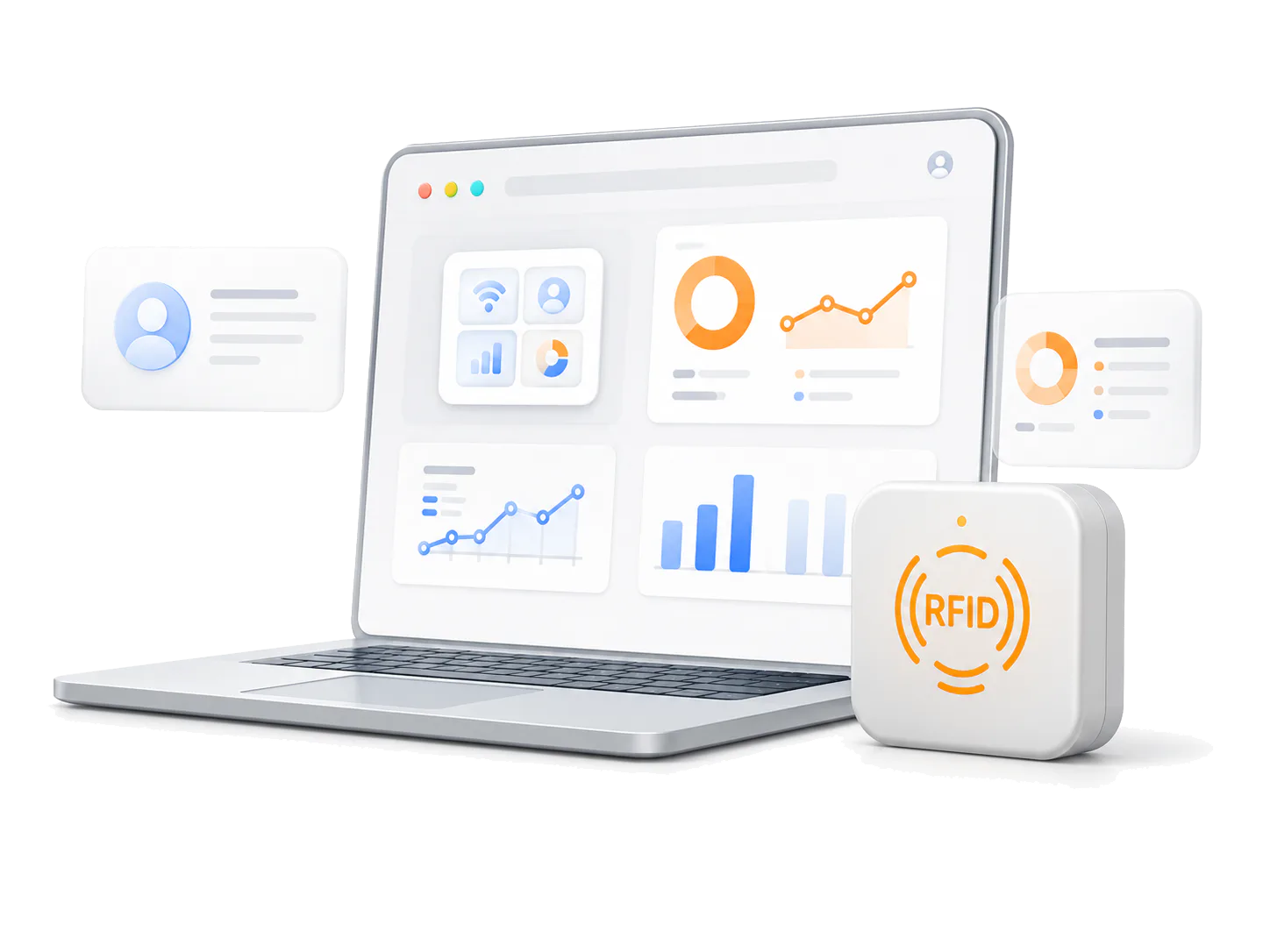
The RFID smart platform management system suits manufacturing, warehousing and logistics, trade and distribution, and chain retail. It supports item management, tag management, inventory management, inbound and outbound management, stocktaking, device onboarding, and security gate management, unifying RFID data with business processes.
The system is integrated and managed around commodity, electronic tagging, warehouse, warehouse location, business documentation and equipment data, including commodity information, labelling information, procurement entry, release of the warehouse, stock status, equipment operational status and operational logs.
The system can link RFID Tag to the corresponding commodity by coding, printing, issuing and binding.
Contact Us
Tell us about your business scenario. We can help define the right tags, hardware, platform, and deployment approach.