
Client typeState-owned enterprises in the electricity sector
Case Detail
RFID Tool Warehouse Management Project for a Guangdong Power Company
RFID tool tags, self-service terminals, smart security gates, handheld terminals, and a warehouse management system together deliver self-service issue and return of production tools, exception verification, mobile stocktaking, and inventory visibility.
Access Program
Project cycle1 month
Managed AssetsHammers, drills, seat belts and other production operational tools
Core applicationsSelf-service inbound and outbound + security gate verification + mobile stocktaking + system integration
Client Background
The customers are a large power company in Guangdong, which has a number of production operations and tools stores, mainly for hammers, drills, seat belts and other repairs, construction and safety protection tools.
Traditional management relies on manual registration and on on-site verification, requiring the recording of tools, quantities, licensees and returns on a case-by-case basis. As the variety of tools and their frequency of use increases, clients want to achieve self-help access, automatic return, rapid inventory, unusual out-of-the-box warning and stock visualization management.
Project Challenges
Tools are numerous and frequent.
The tools are different in their specifications, use and requirements, and there are a large number of access and return operations on a daily basis, and it is difficult to keep up to date with the manual approach.
High workload of manual registration
Paper tables or manual entries require a check-by-case check-up, which is prone to leakage, misentry and late information updates.
Lack of clarity on inventory
It is difficult to obtain a complete inventory, in stock, in demand, in unrepatriated quantities and in a timely manner, with a breakdown of the various tools.
It's hard to trace the responsibility for the tool.
The multiple adoptions and personnel movements of tools make it difficult to quickly locate responsibility for loss, damage or delay in the return of the tools.
Unusuals bring out control problems
Unacknowledged registration tools may be brought out directly, and manual inspections are difficult to identify and effectively intercept in real time.
System data are independent of each other
The warehouse data are not linked to the internal system, there are duplicate entries, stocks are not synchronized and statistical calibres are not uniform.
Solutions
The project uses an integrated solution of RFID tool tags, a self-service terminal, RFID security gates, RFID handheld terminals, and a warehouse management system to give every tool a unique RFID digital identity. When a tool is received, a record is created and a tag is bound, capturing its category, specification, location, status, and responsible person.
After staff verify their identity at the self-service terminal, the system identifies tools in batch, creates issue or return records, and updates inventory in real time. The RFID security gate at the warehouse exit automatically checks whether each tool has a completed issue record, and an abnormal status triggers a light-and-sound alarm.
Managers can complete inventory, inventory, search and unusual review through RFID; the system board focuses on the display of inventory, access, non-repatriation and detail of tools and interface with client internal management platforms to provide inter-operating personnel, organizations, tools and business records.
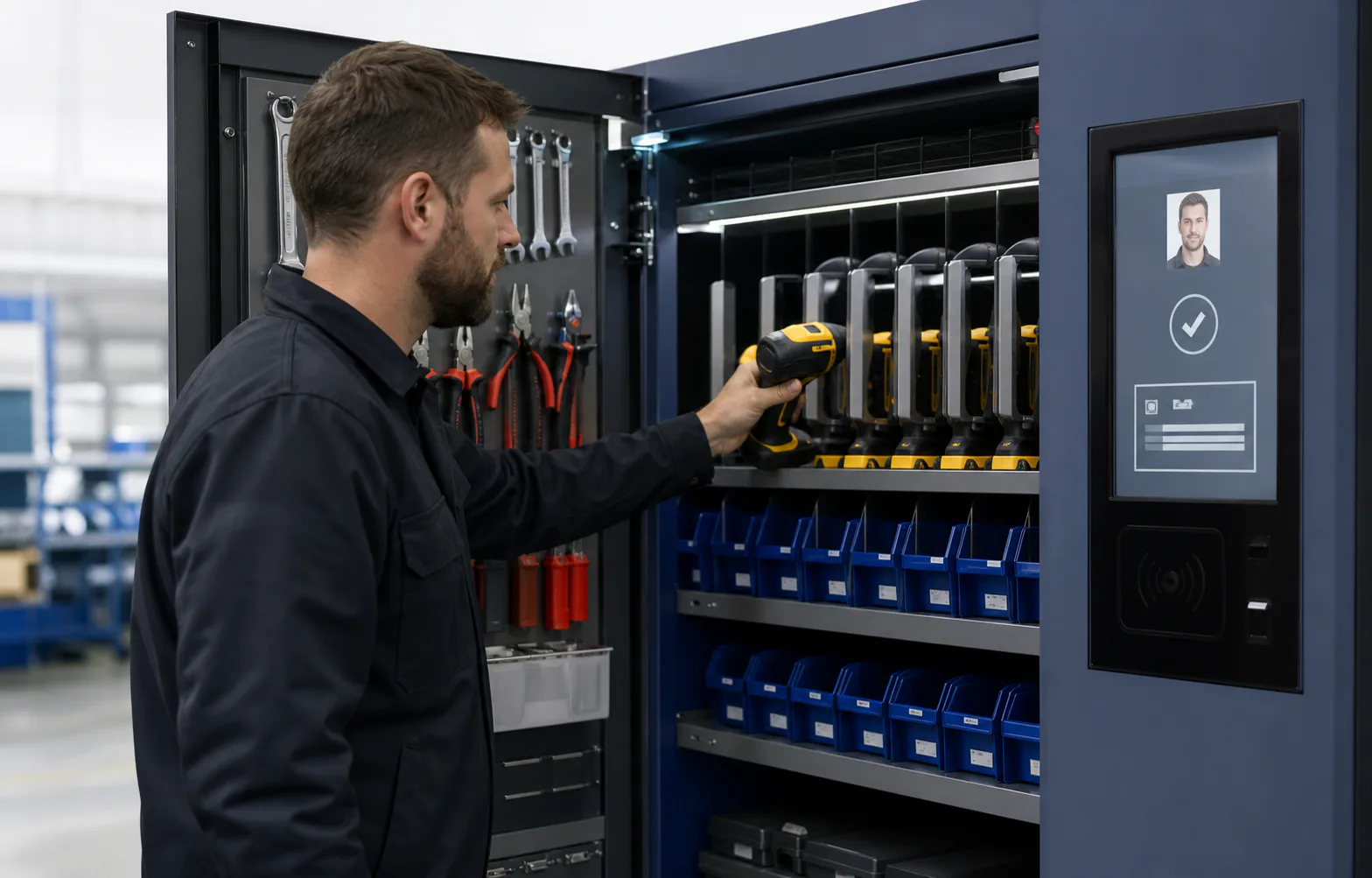
Authentication and self-help

Tool tab-sletting
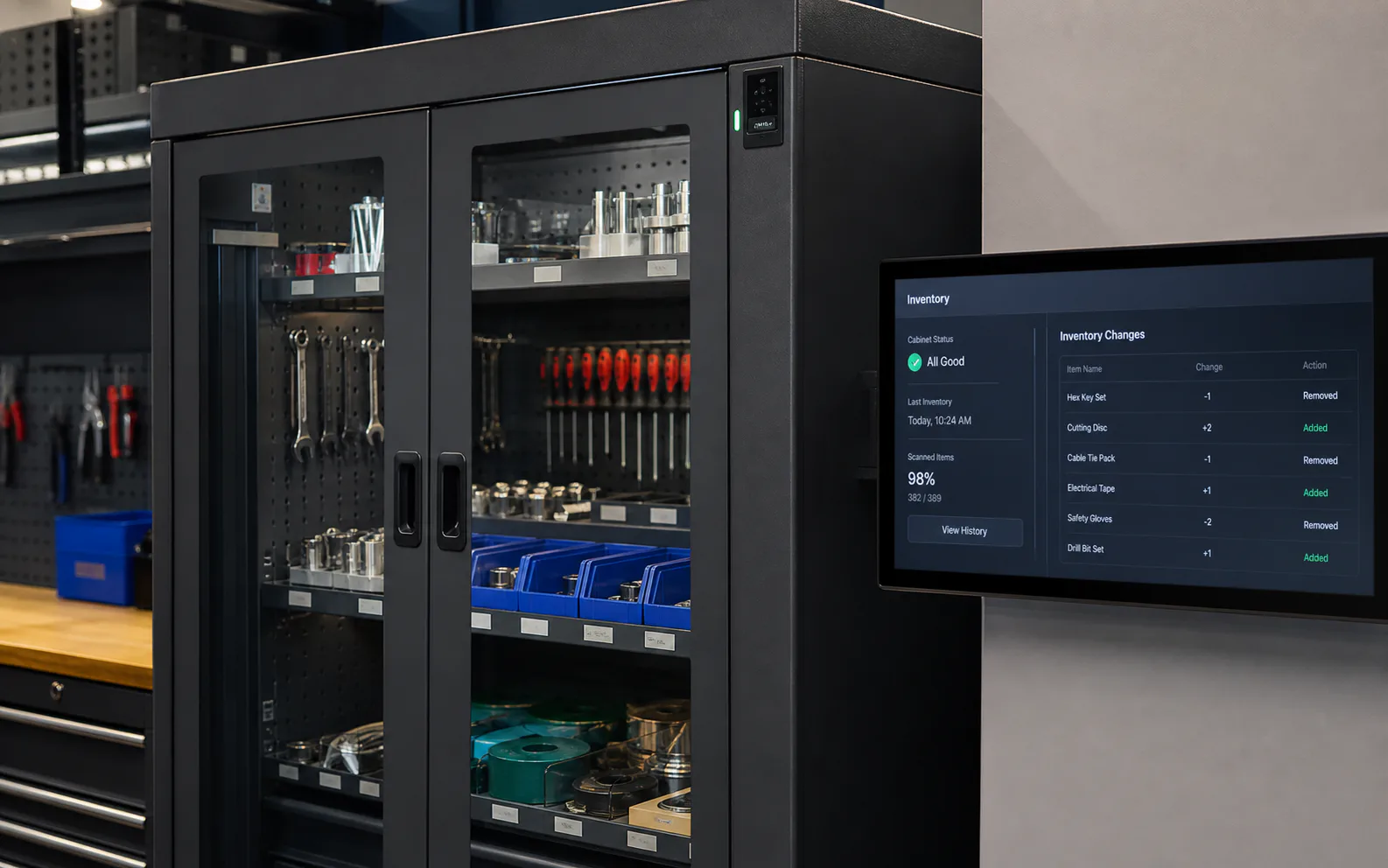
Security gate verification and exception alerts
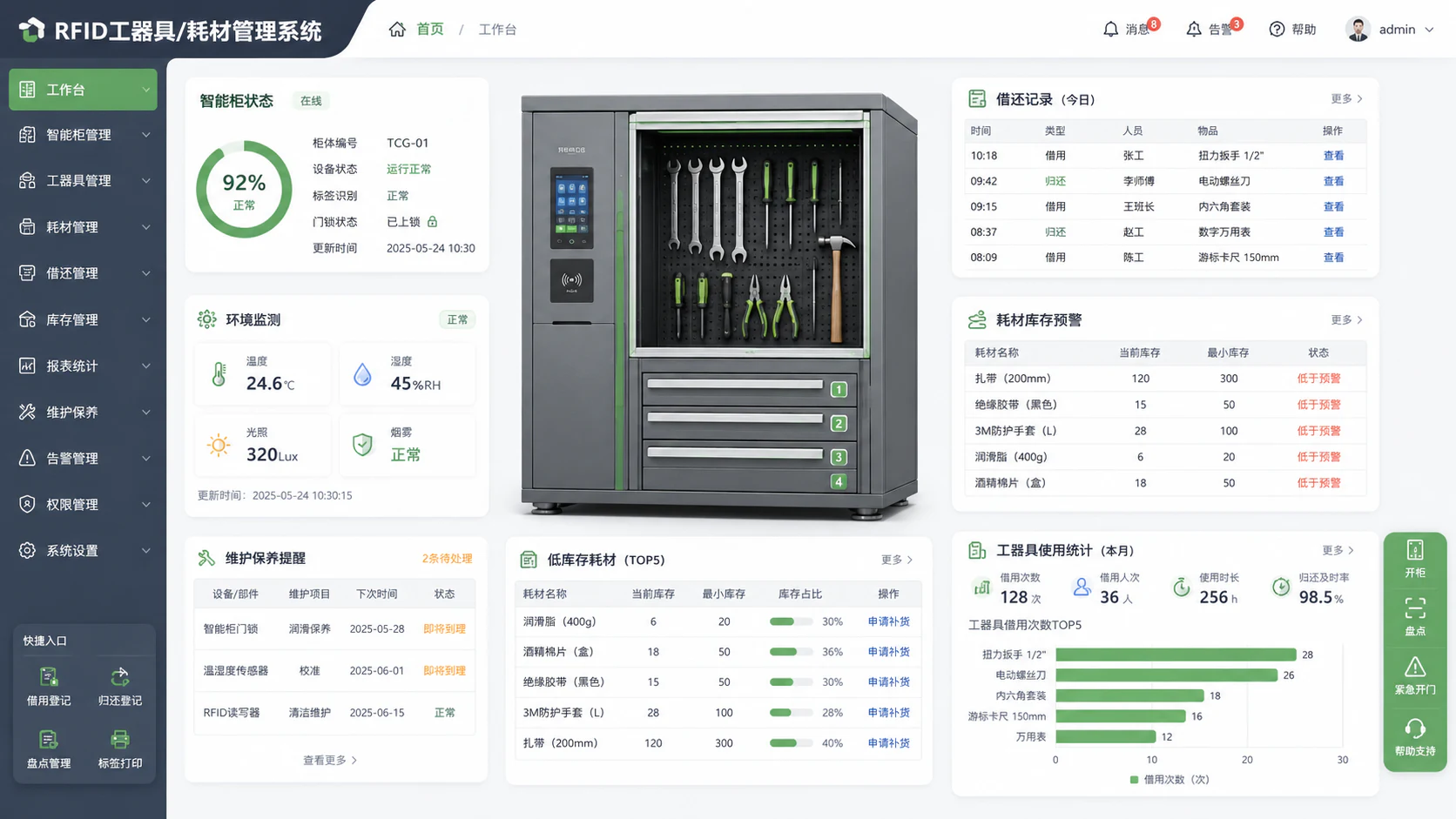
Stock board and data return
Workflow
Tool Import
Label Printing Bind
Tool Registry
Identification of personnel
Self-help collar restitution
Automatic security gate verification
Inventory updates in real time
Exception Alerts
Analysis and Data Return
Key Functions
Tool archives management
Uniform maintenance of numbering, name, type, specification type, owner ' s warehouse, location, status and accountability information.
RFID tag management
Support for the production, coding, binding, verification, retracing, changing, untie and scrapping of the EPC to achieve one size.
Tool-Inventory Management
Complete registration of new tools, labelling, quantity check and distribution of storage, and automatically update inventory.
Self-help and restitution
Once the identification has been completed, the person is able to obtain the access and return through the self-help terminal identification tool.
RFID security gate verification
Automatically verify the exported instrument, triggering alarms on unregistered or abnormally-inactive instruments.
RFID Batch Count
The quick read-through handheld tool identifies the disked, undisclosed, surplus, deficit and location anomalies.
Early warning and life-cycle management
Record entry, access, return, inventory and unusual treatment, with early warning of delays, stock shortages and anomalies.
Data Viewer and System Intersect
Inventory, access, in-house and unrepatriated data are displayed and synchronized with client internal systems.
Deployment
A. Software systems
- RFID Tool Bank Warehouse Management System
- Tool-based archives management
- RFID tag management
- Tool-Inventory Management
- Self-help access and restitution management
- RFID security gate verification management
- Inventory and inventory management
- Early warning management
- Life cycle records
- Data Visualization Board
- User and Data Permission Management
- Internal systems interface services
B. Hardware equipment
 RFID Self-Help Operating Terminal
 RFID smart security gate
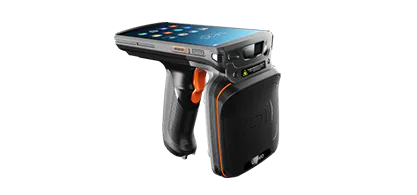 RFID Handheld Terminal
 RFID Tool Electronic Label
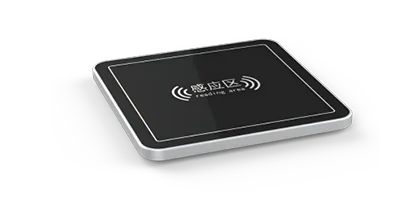 Identification equipment
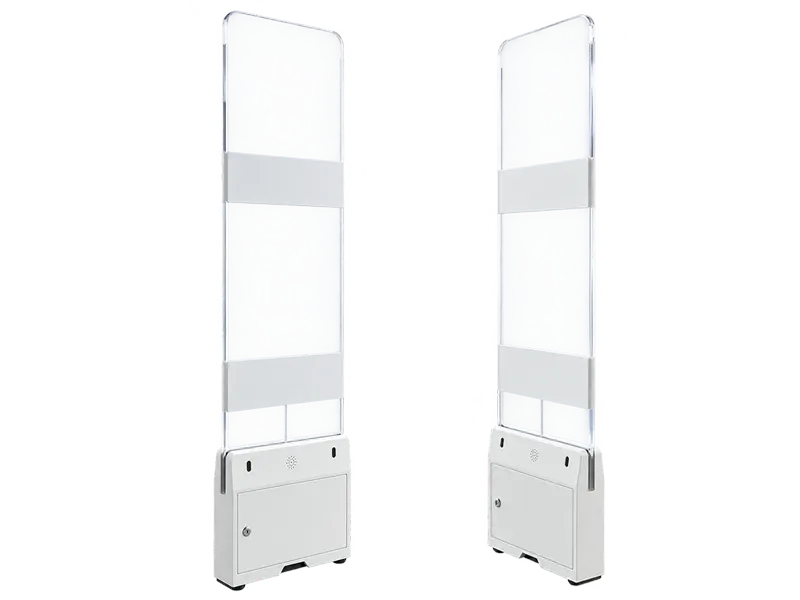 Security gate light-and-sound alarm device
Results
How can the high turnover and poor inventory of tools be managed safely and efficiently?
An RFID tool store warehouse management system connects tool receiving, self-service collection, returns, security gate verification, mobile stocktaking, and exception alerts, making inventory more accurate, responsibility traceable, and work more efficient.