
IndustryPower
Case Detail
RFID Emergency Repair Tool Box Project at a Railway Power Supply Section
By combining a warehouse management system with RFID security gates, handheld terminals, and 2.4 GHz light-and-sound tags, every repair tool and material gets a unique identity, enabling inbound and outbound registration, fast inventory counting, and light-guided locating of a specific item.
Access Program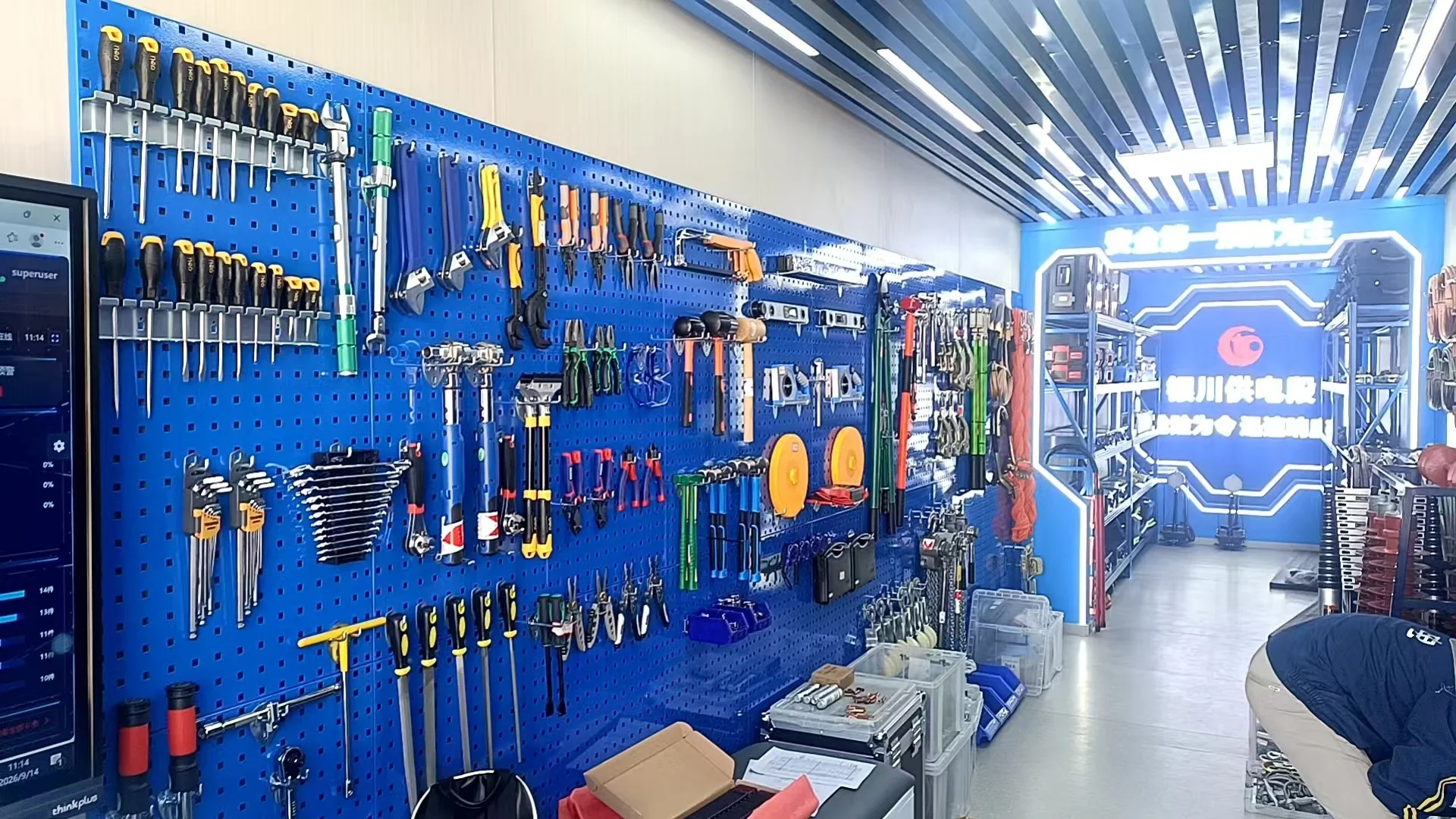
Managed AssetsPower repair tools and materials
LocationA Railway Power Supply Section Repair Base
Core applicationsInbound and outbound registration + fast inventory counting + light-guided locating + one item, one code
Client Background
The emergency repair base of a railway power supply section handles the daily preparation, issue, return, and emergency support of power repair tools and materials. Repair assignments place high demands on tool completeness, material issue records, and on-site return verification.
As the variety of tools and materials grew, manual registration and counting showed clear limits: issue records were unclear, returns were hard to verify, physical quantities did not always match the checklist, and items left behind on site were not easy to spot in time.
Project Challenges
Overlooked tools are hard to spot in time
After a repair assignment, staff must quickly confirm whether every tool and material has been brought back; checking item by item by hand easily misses something.
Issue and return records are not clear enough
Manual registration cannot keep accurate, continuous records of what was taken out, what was returned, and the current status of each item.
Reconciling physical stock with the checklist is heavy work
The actual contents of an emergency repair box must stay consistent with the system checklist, and manual reconciliation is prone to mistakes.
Finding a specific item takes time
When a particular tool or material is needed, staff want to locate and pick the right item quickly.
Solutions
The project combines a warehouse management system with RFID security gates, RFID handheld terminals, RFID desktop issuers, 2.4 GHz readers, light-and-sound tags, a laser printer, and a TV display wall, giving every tool and material a unique identity and record.
Inbound, issue, and return steps generate business records through the system and RFID devices, reducing reliance on manual registration. On site, RFID handheld devices support counting and reconciliation, helping reveal differences between physical quantities and the system checklist.
When a specific tool or material is needed, staff select the target item in the system; the 2.4 GHz reader and light-and-sound tag work together to give a light-and-sound cue that helps staff locate it faster.

Unique ID per Item

Automatic records for inbound and outbound

Mobile inventory counting
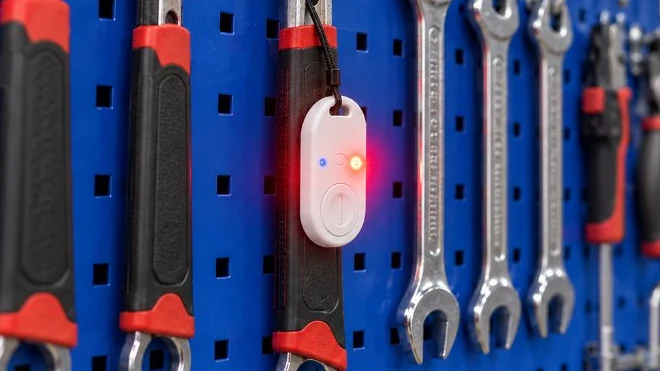
Light-guided item locating
Workflow
Items set-up
Tag binding / one item, one code
Inbound registration
Issue / outbound
Security gate and system records
Use during repair work
Return registration
Inventory reconciliation
Unusual treatment
Find a designated item with light-guided locating
When staff need to find a specific repair tool or material, they select the target item in the system. The 2.4 GHz reader triggers the matching light-and-sound tag, whose light and sound cues help staff find the target quickly.
This makes the tool-finding step more direct and reduces repeated searching across rows of workstations and tool racks.

Select the target in the system

Wireless trigger
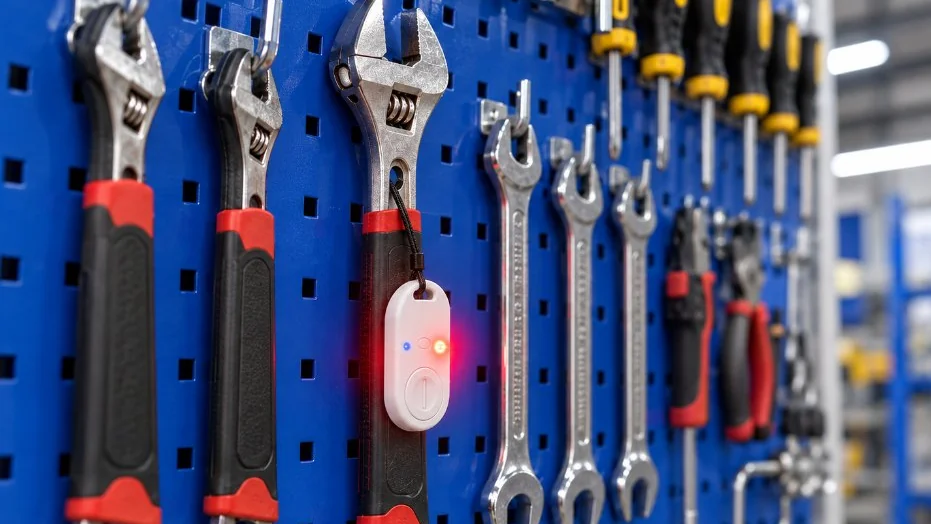
Tag light and sound cue
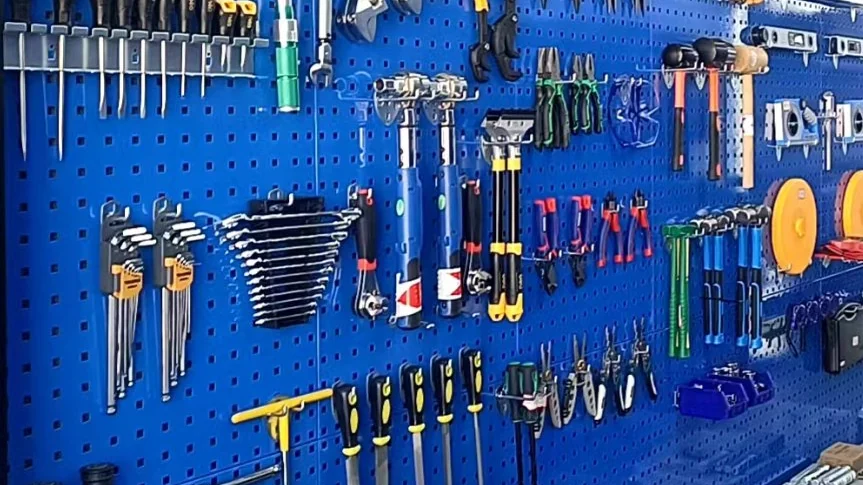
Find the item quickly
Key Functions
Unique Item Identification
Each tool or material gets its own identity and system record, so items and records map one to one.
RFID tag management
Supports label printing, encoding, binding, verification, and reprinting or replacement, giving tools and materials an RFID identity that can be read directly.
Inbound and outbound registration
Records inbound, issue, and return events for tools and materials, forming a queryable ledger.
RFID fast-track inventory
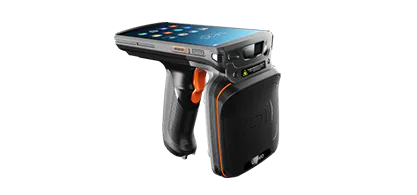
RFID handheld devices help reconcile physical items on site against the system checklist.
RFID security gate identification
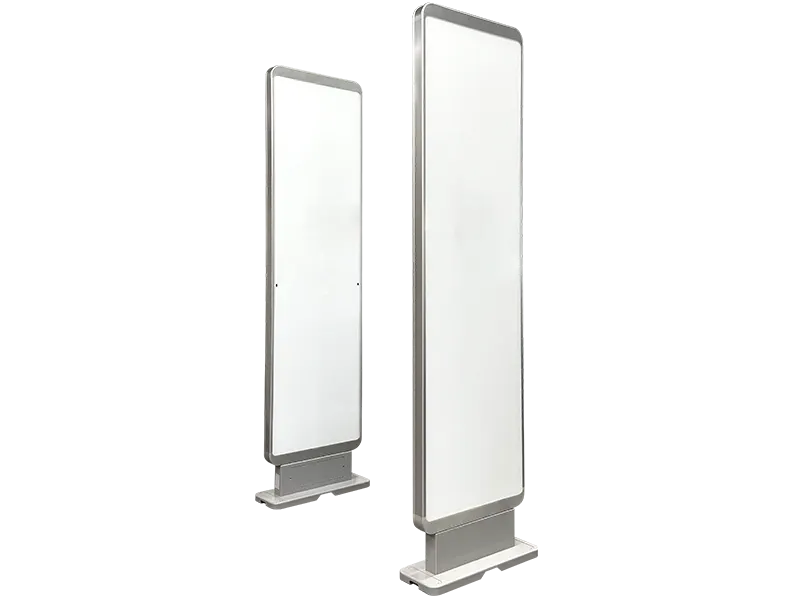
Identifies movements of repair materials through the area entrance and logs the events, reducing manual registration.
Light-guided item locating
2.4 GHz readers and light-and-sound tags help locate a designated item and guide staff to the target.
Exception alerts and handling
Raises alerts for overdue returns, inventory discrepancies, and mismatches between physical items and the checklist, so staff can follow up promptly.
Data display
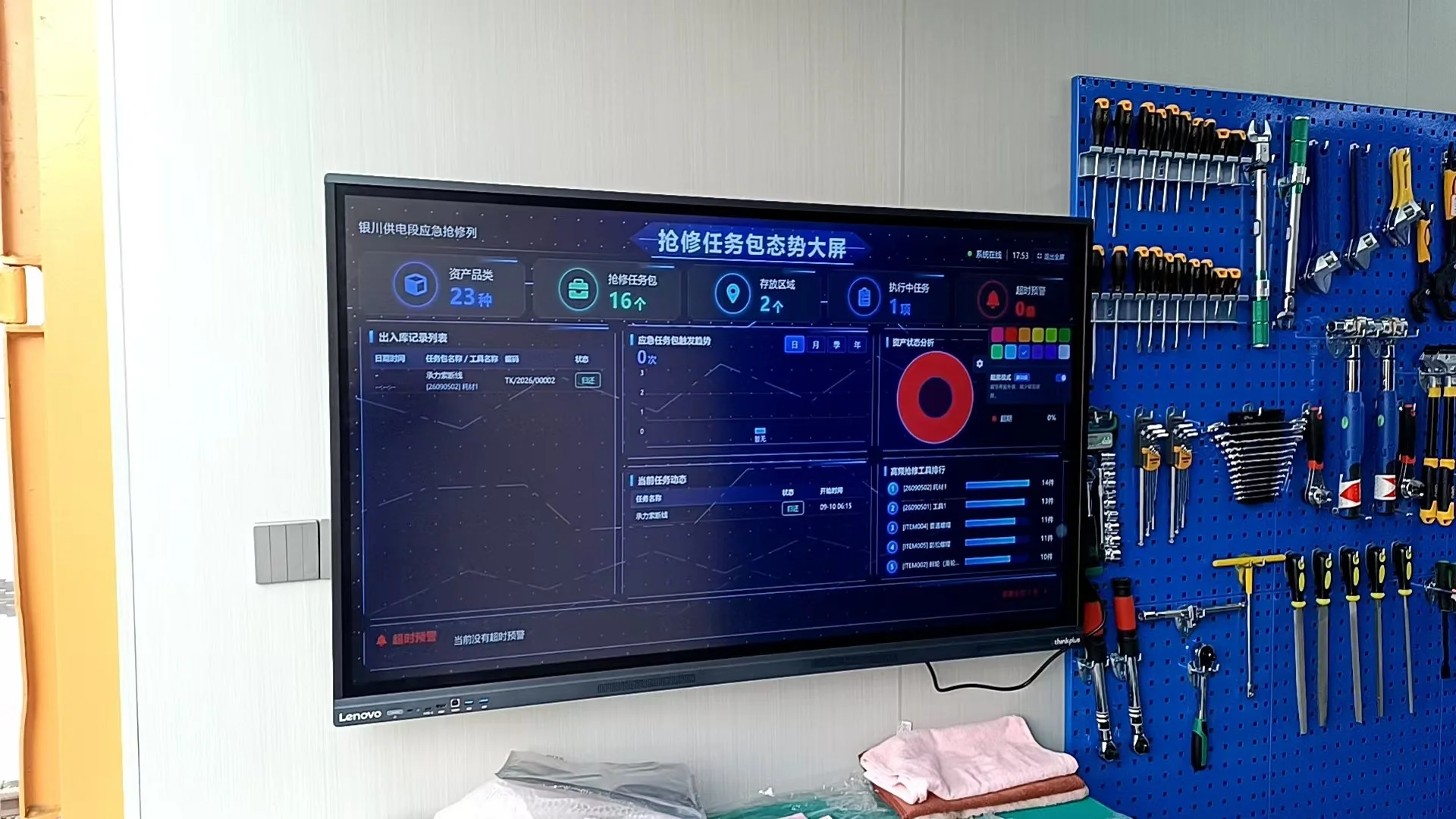
The warehouse management system and the TV display wall present material and business data.
Deployment
A. Software systems
- Warehouse management system
- Tool and material record management
- Inbound and outbound record management
- Inventory management
- Inventory count data management
- Device and business coordination
- Data display
B. Hardware equipment
 RFID security gate
 RFID handheld terminal
 RFID card issuer
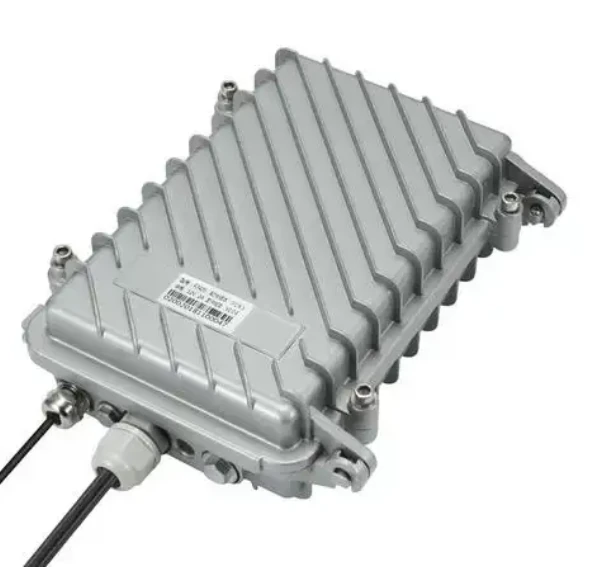 2.4 GHz reader
 Light-and-sound tag
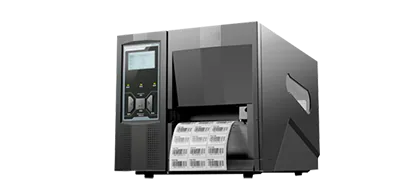 Laser printer
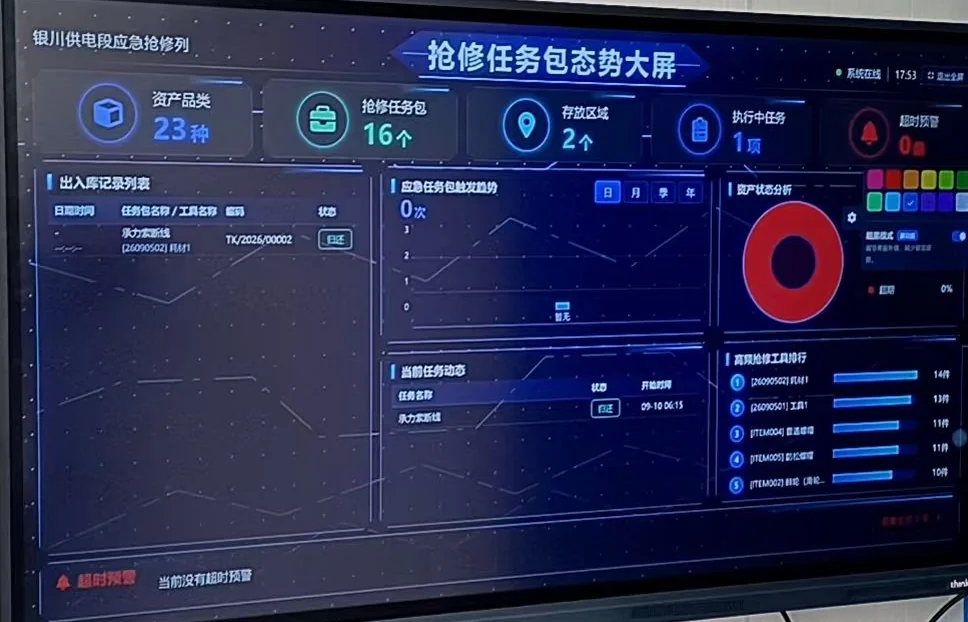 TV display wall
Device roles
- RFID security gate: identifies movements and logs events at the area entrance
- RFID handheld terminal: mobile inventory counting and on-site verification
- RFID desktop issuer: tag initialization and binding
- 2.4 GHz reader: triggers and reads light-and-sound tag signals
- Light-and-sound tag: light and sound cue for the target item
- Laser printer: prints required labels or documents for business use
- TV display wall: presents warehouse and tool management information
Results
Still unclear what was taken out and slow to find tools? Make repair preparation calmer.
A warehouse management system working with RFID and 2.4 GHz light-and-sound tags keeps repair materials clearly tracked, clearly returned, accurately counted, and easy to find.